

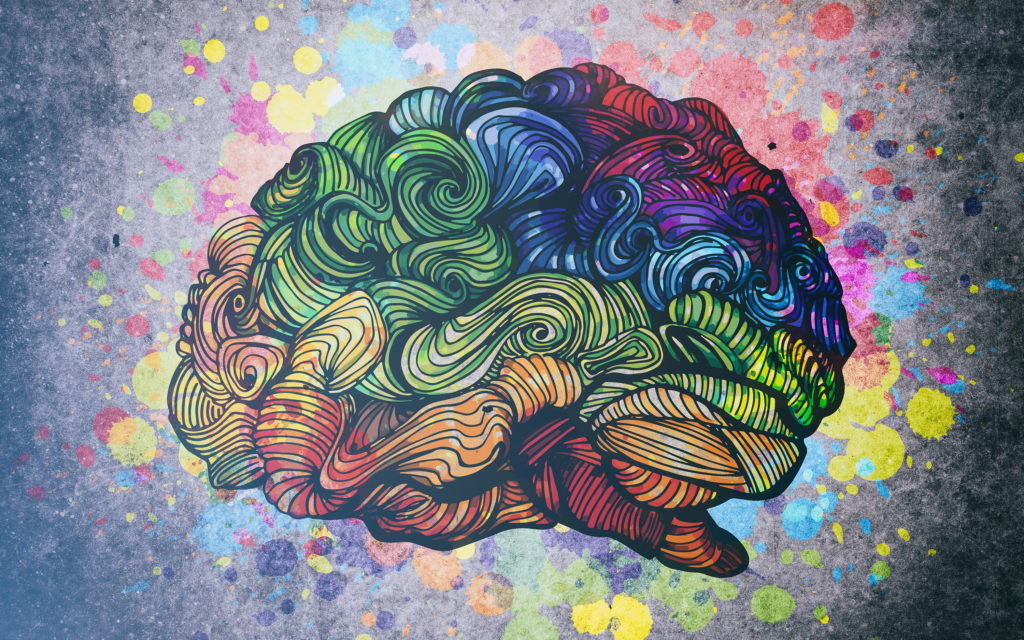
Gratitude is celebrated throughout philosophy and religion; recent scientific studies suggest it carries significant benefits for our mental and physical health. But very little is known about what actually happens in our brain and body when we experience it.
Why does that matter? Because better understanding the physiology of gratitude can help pinpoint strategies for harnessing its health benefits and help people understand the importance of fostering this powerful emotion. The goal of my research has been to lay the groundwork for understanding what happens in the brain when we feel grateful—and a picture of the grateful brain is now starting to emerge.
Better understanding the physiology of gratitude can help pinpoint strategies for harnessing its health benefits
When I first embarked on the journey to study gratitude, I came across philosophical treatises and religious exhortations emphasizing the importance of gratitude, along with scientific studies suggesting that gratitude can improve your sleep, enhance your romantic relationships, protect you from illness, motivate you to exercise, and boost your happiness, among many other benefits.
At the time, however, very little was known about what happens in our brains and bodies when we experience gratitude, which made it difficult to understand how gratitude actually works. Since I’m a neuroscientist, I zeroed in on the neurobiology of gratitude with a more specific question in mind: Can our brain activity reveal anything about how gratitude achieves its significant benefits?
How Gratitude Strengthens the Mind-Body Connection
Given the clear relationship between mental and physical health, I thought that understanding what happens in the brain when we feel gratitude could tell us more about the mind-body connection—namely, how feeling positive emotion can improve bodily functions. I also thought these results could help scientists design programs aimed at generating gratitude by helping them zero in on the precise activities and experiences most essential to reaping gratitude’s benefits.
It must be said that actually capturing people in the moment of feeling gratitude poses some challenges. After all, some people may not feel gratitude when we expect them to, and others may even feel grateful in unexpected situations. I thought my best bet would be to try to induce gratitude through powerful stories of aid and sacrifice.
To achieve this, I turned to the USC Shoah Foundation Institute for Visual History, which houses the world’s largest repository of videotaped Holocaust survivor testimonies—many of which, perhaps surprisingly, are filled with breathtaking acts of selflessness and generosity. Along with a team of amazing undergraduates, I began by watching hundreds of hours of survivor testimony to find stories in which the survivor received help of some kind from another person.
We assembled a collection of these stories and transformed them into short scenarios that we shared with our participants. Each scenario was re-phrased into the second-person (e.g., “You are on a wintertime death march and a fellow prisoner gives you a warm coat”) and presented to our study’s participants. We asked them to imagine themselves in the scenario and feel, as much as possible, how they would feel if they were in the same situation. While participants reflected on these gifts, we measured their brain activity using modern brain imaging techniques (in the form of functional magnetic resonance imaging, or fMRI).
The regions associated with gratitude are part of the neural networks that light up when we socialize and experience pleasure.
For each of these scenarios, we asked participants how much gratitude they felt, and we correlated this rating with their brain activity in that moment. While such an approach will not elicit exactly the same feelings as actually living through such situations, participants overwhelmingly reported strong feelings of gratitude, deep engagement in the task, and, perhaps even more importantly, an increased empathy for and understanding of the Holocaust as a result of participating in the study.
What’s more, our results revealed that when participants reported those grateful feelings, their brains showed activity in a set of regions located in the medial pre-frontal cortex, an area in the frontal lobes of the brain where the two hemispheres meet. This area of the brain is associated with understanding other people’s perspectives, empathy, and feelings of relief. This is also an area of the brain that is massively connected to the systems in the body and brain that regulate emotion and support the process of stress relief.
Three Ways Gratitude Benefits Our Minds
These data told us a reasonable story about gratitude:
- It can help relieve stress and pain. The regions associated with gratitude are part of the neural networks that light up when we socialize and experience pleasure. These regions are also heavily connected to the parts of the brain that control basic emotion regulation, such as heart rate and arousal levels, and are associated with stress relief and thus pain reduction. Feeling grateful and recognizing help from others creates a more relaxed body state and allows the subsequent benefits of lowered stress to wash over us. (We recently published a scientific paper elaborating on these ideas.)
- It can improve our health over time.They are also closely linked to the brain’s “mu opioid” networks, which are activated during close interpersonal touch and relief from pain—and may have evolved out of the need for grooming one another for parasites. In other words, our data suggest that because gratitude relies on the brain networks associated with social bonding and stress relief, this may explain in part how grateful feelings lead to health benefits over time.
- It can help those with depression. Perhaps even more encouraging, researcher Prathik Kiniand colleagues at Indiana University performed a subsequent study examining how practicing gratitude can alter brain function in depressed individuals. They found evidence that gratitude may induce structural changes in the very same parts of the brain that we found active in our experiment. Such a result, in complement to our own, tells a story of how the mental practice of gratitude may even be able to change and re-wire the brain.
This article originally appeared on Greater Good, the online magazine of UC Berkeley’s Greater Good Science Center, one of Mindful’s partners. View the original article.

How to Practice Gratitude
Practicing gratitude has incredible effects, from improving our mental health to boosting our relationships with others. Explore ways you can be more appreciative in our mindful guide to gratitude. Read More ›
A Simple Mindful Gratitude Exercise
Science suggests that expressing true gratitude boosts your health and spreads happiness. Here are a few simple exercises to help you build your capacity for gratitude. Read More ›

What Does It Mean to Be Grateful?
Gratitude isn’t just in our head: It takes root in our heart and in our senses, for one beautiful moment…and then the next. Here are three ways to practice gratitude, from a.m. to p.m. Read More ›
