

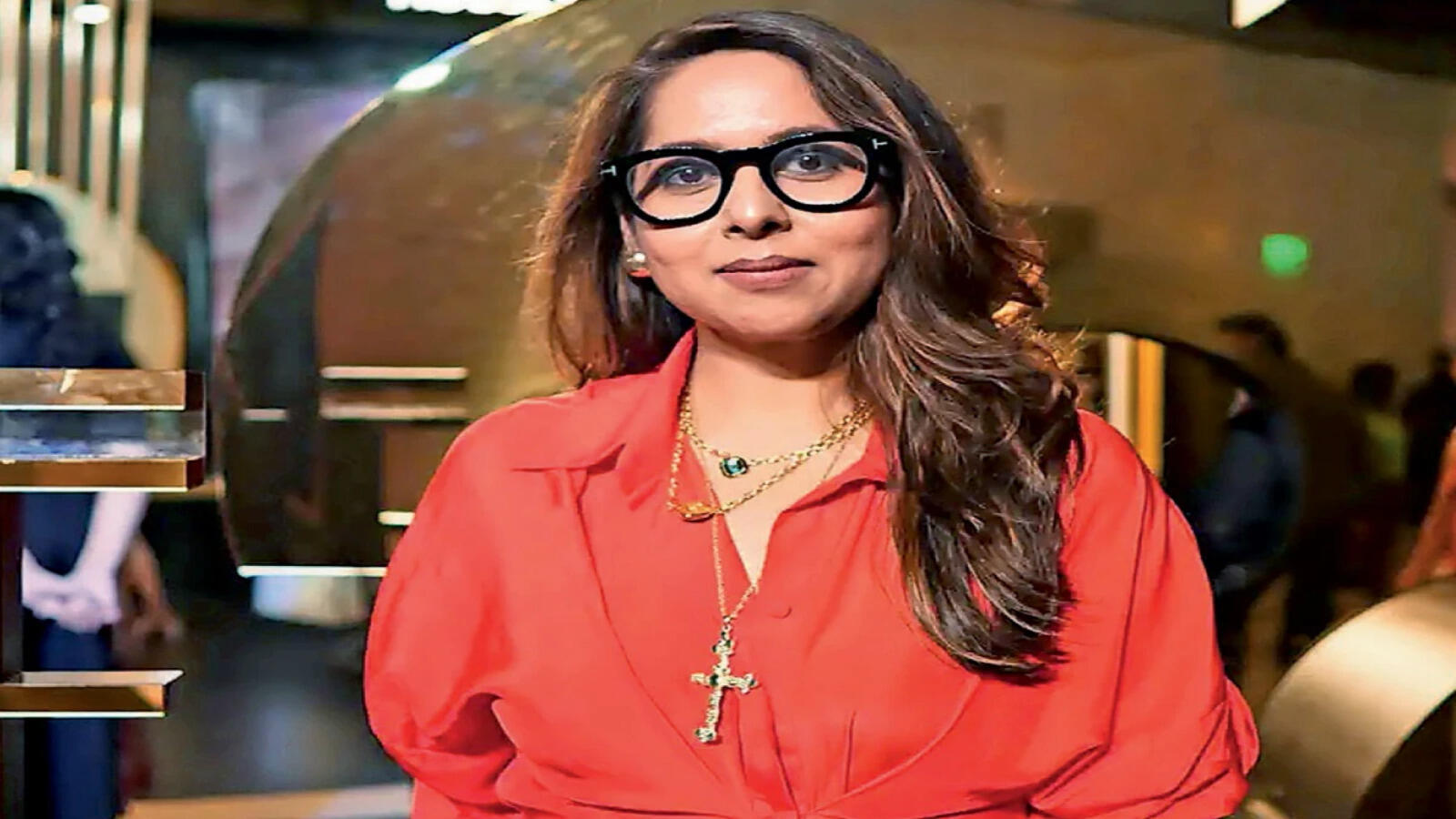
The business of beauty is changing. Sunanda Khaitan is at the centre of that change, managing India’s legacy brand Lakmé. She can segue from undertones to the science of L-star, A and B values (ways of mapping skin colour) without missing a beat. She discusses the changing Indian consumer, Lakmé’s legacy, the ‘skinification’ of makeup, viral trends, and what influencers bring to the table.
Edited excerpts.How has the Indian beauty consumer changed? What does that mean for Lakmé?The biggest shift I have seen in the last 20 years is that beauty in India has moved from permission and validation to self-expression. Earlier, you put on lipstick and foundation because you wanted to conform and look a certain way. Then makeup became occasion-led: There is a birthday or a wedding to attend.
For a long time, Lakmé was explaining how to get dressed for a wedding, what look to wear, working with designers like Sabyasachi, Tarun Tahiliani, and Manish Malhotra because makeup was tied to couture and occasion dressing.Today, it has moved from ‘I want to follow trends’ to ‘I want to express myself’. It is no longer ‘I want to do it to make you happy’; it is ‘I want to do it to make me happy’.That modern Indian woman is independent, earning for herself, and stepping out every day.
She wants a good base that looks natural,
She wants a good base that looks natural, she may line her eyes with kohl or eyeliner, and for colour it could be a gloss or lip oil rather than a pigmented lipstick. Makeup has moved from occasion to everyday.Consumers now talk about ingredients almost like chemists. Has that changed how you innovate?Absolutely. The consumer is far more informed. Ingredient understanding, which was more prevalent in skincare, has now come into makeup as well.
All makeup, especially bases, are getting skinified [meaning skincare ingredients are being integrated into formulations]. I have stopped jumping on trends. We innovate around certain vectors – ingredients and skinification, sensory understanding of Indian weather, and understanding Indian skin tones.What does innovating for the Indian consumer mean?Weather is a big part of it.
For much of the year, we have high humidity. You may still need a matte finish, but that doesn’t mean the product should feel dry. Even something like a blush changes with season and climate. In the festive months, as India goes into winter, I have used a cream blush rather than a powder blush because skin can feel drier.Skin tone is another big moat. We do a study of around 2,000 consumers to understand the spread of colour from north to south.
What has also changed is that earlier we
What has also changed is that earlier we sold more lighter-tone foundations; today I am selling many more medium and darker tones, as consumers are moving towards shades closer to their natural skin tone.Sometimes innovation is practical. Glossy sticks can melt in places where temperatures hit 50 degrees [Celsius]. So, we put ours into a click stick where only a millimetre of product comes out.These are the kinds of details I want to invest in.Beauty is also extraordinarily trend-driven today: K-beauty, cushion foundations, lip oils, glass skin.
Surely, you can’t ignore trends?India is still a developing beauty market, and as it grows, there will be fragmentation. Fragmentation matters, but it doesn’t bother me. I watch closely what is coming and ask what is good for the Indian consumer. Take cushion foundation. It became a big Korean beauty trend, but there is genuinely something useful about the format: It picks up little product and deposits it evenly, which is good for somebody who doesn’t know how to use a foundation brush.
We took that idea, combined it with our Indian skin-tone understanding, and launched a cushion foundation.The process: See a trend, put it with a consumer panel, test whether it works across skin tones, and ask if it is a fad or there is something useful in it. If there is, innovate it for India.How do you engage with influencers?Influencers are important. At every launch, we partner with upwards of 400–500 creators.
In an underpenetrated category, where you are teaching
In an underpenetrated category, where you are teaching consumers how to use makeup, they are an invaluable asset. But it is not just a reach game. It is an engagement game. The landscape is moving from only using mega influencers for reach towards micro influencers who can create engagement. My brief to creators: Simplify makeup, make it feel achievable, make it everyday.Lakmé is 74 years old.
In a market crowded with new brands, what does being a legacy brand mean today?When we started, we were market developers. The job was to develop the category. Today, it is no longer necessarily about Lakmé bringing the first format. But even now, makeup penetration in India is still sub-30%, so there is still a category to create. Lakmé Fashion Week has been part of that market-development role for us.
Our association with fashion has always been about bringing the two worlds together and showing consumers how beauty moves with the way women dress.With so many brands competing for attention, how does a legacy brand ensure it stays relevant instead of only feeling familiar?My CEO puts it beautifully: There has never been a time when there have been more brands, but there has also never been a more difficult time for consumers to remember them.
There is a difference between being salient for some time and being memorable. I am not chasing salience for a bit; I am chasing memorability over the long term, so that you keep coming back.
