


Creatine at a Glance
- Creatine monohydrate can modestly improve strength and performance during repeated high-intensity efforts. Its effect on muscle growth is generally small. [18, 24]
- For generally healthy adults who choose to take it, our usual recommendation is 3 to 5 grams of creatine monohydrate daily. Loading is optional. [18, 56]
- Some people gain water weight early, especially when loading. Larger doses can cause stomach upset. Creatine can also affect the creatinine result used to estimate kidney function. [10, 45, 57]
- Evidence for benefits in endurance, cognition, and other health uses is less consistent or depends on the population studied. [26, 27, 30, 37]
Creatine is one of the most widely used dietary supplements. As with any supplement, it helps to know what you can reasonably expect from it, how to take it, and what the safety research actually measured.
What is Creatine?
Creatine was discovered in the 1830’s by French chemist Michel Eugene Chevreul as a naturally occurring component in meat. [2] In humans, 95% of creatine is found in the skeletal muscle, with 5% spread between the heart, brain, and gonads. Of the fraction contained in the muscle, about two-thirds is bound to inorganic phosphate to form phosphocreatine, and the other one-third exists as free creatine.
Creatine levels in the body vary by size, physical activity levels, and more, though sex and age do not appear to influence creatine levels. [3] The body breaks down ~ 1 to 2% of creatine in the muscle per day into creatinine, which is excreted into the urine. Creatine levels in the body are maintained through both endogenous and exogenous sources. Humans are capable of making creatine, e.g. endogenous production, from three other amino acids: arginine, glycine, and methionine in the kidney, liver, pancreas, and brain. [4]
Creatine is also found in food, e.g. an exogenouse per kilogram. [3] A small amount of creatine is found in dairy, including breast milk, but plant-based foods do not contain creatine. [5]
In individuals who eat more meat and animal products, endogenous production of creatine is decreased to maintain the body’s creatine stores. By the same token, endogenous production of creatine is ramped up in those who eat primarily plant-based diets. [3]
What Does Creatine Do?
Creatine helps recycle ATP, the immediate energyd phosphocreatine helps replenish ATP quickly
Creatine kinase transfers a phosphate group from phosphocreatine directly to ADP, regenerating ATP and leaving free creatine. During recovery, the reaction can run in the other direction to replenish phosphocreatine. [9]
During high-intensity exercise, the working muscles’ ATP demands increase substantially. Depending on the exercise, muscle phosphocreatine stores can become nearly exhausted within about 10 to 15 seconds. [6]
Phosphocreatine recovers quickly at first, then more slowly. Full recovery can take several minutes, depending on the exercise and recovery conditions. [7]
Now that we know what creatine does in the body and how normal levels are maintained, what would happen if we could get those muscle creatine levels even higher?
How Does Supplemental Creatine Work?
Regularly consuming supplemental creatine can increase both total creatine and muscle phosphocreatine levels from ~ 10 to 40%. [8] While we can make about 1-2g/day in kidney and liver, supplementing with additional creatine at 3 to 5g/day increases muscle creatine levels further. Thus, by increasing muscle levels of creatine, it is thought that an individual will have larger stores for rapid energy production, although there are a number of mechanisms that contribute to increasing exercise performance.
Creatine Increases Cellular Energy
Creatine supplementation increases intracellular phosphocreatine and free creatine storage. Increased phosphocreatine helps make more adenosine triphosphate (ATP) by donating its phosphate to adenosine diphosphate (ADP). It also helps create more phosphocreatine during recovery periods. Additional phosphocreatine and ATP can also reduce the formation of reactive oxygen species (ROS), lactate, and hydrogen ions
Creatine Increases Cellular Swelling
Creatine promotes water entry and retention in the muscle cell, subsequently leading to cellular swelling. This increase in cellular swelling may serve as an anabolic signal for muscle growth by increasing muscle protein synthesis rates and decreasing muscle protein breakdown, although the data on this are mixed. Muscle protein synthesis is a complex phenomenon and there are likely multiple ways that creatine supplementation affects this. [6]
Creatine can increase the amount of water in muscle, especially early in supplementation or during a loading phase. Some people gain a kilogram or two on the scale. Longer studies show mixed results for changes in body water. DXA counts water as part of lean mass, so a rise in DXA lean mass is an imperfect measure of muscle growth. [10]
Available research does not show a higher risk of dehydration or cramping with creatine. One observational study of college football players reported fewer cramps and injuries among creatine users. A small study in patients on dialysis looked specifically at dialysis-related cramps. [10, 11, 12]
While we’re busting myths, creatine is not stored within fat tissue and creatine supplementation does not increase fat mass in either the short- or long-term. [13], [14]
Creatine Increases Satellite Cell Activation
Supplemental creatine may increase muscle satellite cells and subsequent muscle hypertrophy. Muscle satellite cells are a special type of stem cell that, when stimulated, can facilitate muscle repair and ultimately become new muscle cell nuclei (myonuclei).
Muscle hypertrophy is defined by an increase in muscle mass and, subsequently, an increase in muscle size. An increase in muscle mass and size requires additional muscle protein synthesis, which is made possible by increasing the amount of muscle protein being made by each myonuclei, and an increased number of myonuclei to support the additional protein synthesis requirements of the larger muscle fibers.
Both resistance training and creatine supplementation increase muscle satellite cell activation to create additional myonuclei, thus supporting increased muscular hypertrophy. When performed together, the increase in myonuclei is greater than either in isolation. [15]
Regularly taking supplemental creatine can increase the creatine content in the body, thereby increasing energy availability, increasing muscle cell swelling, and muscle satellite cell activation, among other mechanisms. However, mechanisms don’t always tell the whole story and we should talk about whether or not supplemental creatine actually improves performance and health. We’ll do that in the next section.
Does Supplemental Creatine Improve Performance?
The available evidence supports a modest benefit for some types of physical performance. The effect depends on what is measured. Early weight gain can matter in sports where athletes carry their body weight.
Throughout this article, we report results as effect sizes. An effect size is the difference between two groups divided by how much people vary within a group, which puts studies measured in kilos, test scores, or depression ratings on the same scale. Around 0.2 is small, 0.5 is medium, and 0.8 is large. One way to picture it: pick one person at random from the creatine group and one from the placebo group. With no effect, the creatine person comes out ahead 50% of the time, a coin flip. At 0.2, the person using creatine comes out ahead about 56% of the time. At 0.5, about 64%. At 0.8, about 71%. For reference, lifting versus not lifting for strength has an effect size ranging from 0.75 to 1.6 [16], and antidepressants for depression have an effect size of around 0.26. [17] Both numbers describe the same gap. The effect size tells you how far apart the two groups are, and the coin-flip number tells you how often that gap shows up when you compare one person from each group. The bigger the effect, the less the groups overlap, and the more often the creatine person comes out ahead.
Does Creatine Improve Strength?
Supplemental creatine increases strength, albeit modestly, in proportion with the increase in muscle phosphocreatine levels and energy requirements of the task. [18] In the days after a loading phase, creatine can add roughly 10 to 20% to repeated sprints and reps to failure at a given weight. [18] That’s 1 or 2 reps for a set of 10, which does increase training load and as a result, could theoretically drive greater improvements in strength and hypertrophy.
For maximal strength, the effect over a training block is modest. In a review of 22 studies, average strength gains were about 8 percentage points greater with creatine plus resistance training than with placebo plus resistance training. [19] Other reviews have found benefits on measures of upper- and lower-body strength, with results varying by test and study duration. [21, 22, 23]
Does Creatine Increase Muscle Growth?
With respect to muscular size or hypertrophy, a recent meta-analysis showed a small increase in hypertrophy with creatine compared to placebo. When measured directly with ultrasound or MRI, creatine adds about 1 to 1.6 mm of muscle thickness. DXA shows about 1.1 kg more lean mass, but DXA counts water as lean mass. [24] This relationship was also seen in a meta-analysis of creatine’s effect on older individuals. [25]
Does Creatine Help Endurance Performance?
Endurance training is less clear. In trained athletes, creatine has no meaningful effect on endurance performance. [26]
Does Creatine Help With Cognition?
Supplemental creatine does not seem to reliably improve cognitive performance, though the data is complicated.
A creatine manufacturer asked the European Food Safety Authority to approve the claim that creatine improves cognitive function, and the panel concluded a cause-and-effect relationship has not been established. [27] In the largest trial designed to replicate earlier positive findings, six weeks of 5 grams per day improved digit span by about 0.2 of a digit, and vegetarians didn’t benefit more than meat eaters. [28] Most of the positive results come from small studies of people under heavy stress, like sleep deprivation, often after a single large dose or a week of loading. In rested, healthy people, the better-run trials show little to no effect. [29]
Does Creatine Help With Depression?
Creatine has been studied as an add-on to antidepressants. Across 11 trials, the overall effect on depression scores was about 0.34, roughly 2 points on the Hamilton Depression Rating Scale. Patients usually need a change of about 3 points to notice a difference. In the better-run trials, the effect drops to 0.06, and the reviewers concluded the true effect may be trid strength training around 0.49. [17]
The trial that started the idea gave creatine or placebo to 52 women starting escitalopram. Response at week 8 was about the same, 64% versus 63%. Remission was higher with creatine, 52% versus 26%, but a third of the creatine group dropped out. [31] Creatine may also carry a risk of mania in bipolar disorder. In one trial in bipolar depression, 2 of 17 people taking creatine became hypomanic. [32]
Does Creatine Protect Against Brain Disease?
Supplemental creatine does not seem to prevent or reduce the burden of diseases like Alzheimer’s, Parkinson’s, and other forms of dementia. Part of the challenge is getting creatine into the brain at all. The brain makes most of its own creatine and takes up little from the blood. Four weeks of 20 grams per day raised brain creatine about 9% on average [33], while muscle stores can rise as much as 40%.
Large trials in Parkinson’s and Huntington’s disease were stopped early because a benefit was unlikely. The Parkinson’s trial randomized 1,741 participants to 10 grams of creatine daily or placebo. [34] In Huntington’s disease, 553 participants were randomized to creatine or placebo, and the trial did not demonstrate a benefit. [35] A small Alzheimer’s pilot study had 20 participants and no placebo group. Brain creatine rose about 11%, the main dementia screening test didn’t change, and the investigators couldn’t rule out practice effects. [36]
Does Creatine Help in Menopause?
While creatine is heavily marketed to women in perimenopause and menopause, evidence for unique benefits remains limited. In postmenopausal women, a recent meta-analysis reported a pooled difference of about 0.37 kg in lean mass, with benefits most evident alongside resistance training. [37] A perimenopause preprint reports a large strength difference when it compares creatine plus resistance training with no training. Comparing creatine with placebo while both groups lifted showed no clear difference. [38]
For bone, 2 years of creatine alone in 200 older women with low bone density had no effect. [39] Two years of creatine with lifting in 237 postmenopausal women had no effect on hip bone density either. [40] If creatine gets you lifting, the lifting will help your bones.
Other Possible Uses of Creatine
In clinical settings like the hospital, there are a number of possible therapeutic targets such as giving creatine phosphate intravenously after a heart attack or using creatine to reduce inflammation in cerebral palsy. However, these are all still active areas of research. [41, 42]
Overall, creatine supplementation appears to be useful for improving strength/power-type adaptations including maximal strength, muscular power, strength stamina, and muscular hypertrophy. These improvements tend to be small to moderate in size, with plenty of interindividual variability. Other applications detailed here require more research to determine supplemental creatine’s effectiveness.
Is Creatine Safe?
Studies in generally healthy adults have found creatine monohydrate to be well tolerated. The evidence is most applicable to the populations and doses studied. [43, 44, 46]
Effect of Creatine on Kidney Function
Research in generally healthy adults has not found a significant reduction in directly measured kidney filtration with creatine supplementation. Evidence in people with existing kidney disease is limited. [45, 46]
Creatine supplementation can raise blood creatinine, which is used to calculate estimated glomerular filtration rate (eGFR). A 2026 review found an average rise of 0.14 mg/dL in creatinine and a drop of about 11 mL/min/1.73 m² in creatinine-based eGFR. In studies measuring filtration directly, the review found no significant decline. [45] The Parkinson’s trial investigators also noted that creatine could affect serum creatinine measurements. [34]
If your creatinine is elevated, tell your clinician that you take creatine. They can assess the result in context and decide whether further testing, such as a cystatin C–based estimate, would help.
Related reading: How Barbell Medicine interprets kidney function labs in lifters.
Creatine Safety in Children
Studies in adolescents have generally focused on performance. Evidence designed to assess safety in children and adolescents is limited. [47]
What About California’s New Law?
California enacted AB 2030 in 2026 to restrict sales of supplements marketed for weight loss or muscle building to people under 18, subject to the law’s terms. The law lists creatine among the ingredients a court may consider when deciding how a product is marketed or represented. [48]
Our view is that most teenagers can focus on training, nutrition, and sleep. Those are the priorities given creatine’s modest potential benefits and the limited safety evidence in this age group.
Creatine in Pregnancy
Human safety data for supplemental creatine during pregnancy and breastfeeding are limited. [49] If you’re pregnant or breastfeeding, discuss supplement use with your healthcare team.
Does Creatine Cause Hair Loss?
Concern about creatine and hair loss traces back to a small 2009 trial in college rugby players. It reported a change in blood levels of dihydrotestosterone (DHT), a hormone involved in male pattern hair loss. The trial did not measure hair loss. [50]
A 2025 randomized, placebo-controlled trial measured DHT and hair outcomes directly. After 12 weeks, resistance-trained men taking creatine monohydrate showed no significant differences versus placebo in DHT or the hair measures assessed. [63]
That trial is reassuring for the population and duration studied. Evidence on longer-term hair outcomes remains limited.
Are Supplements Like Creatine Safe?
Dietary supplements can include vitamins, minerals, botanicals, amino acids, and other ingredients. Product-quality issues include undeclared ingredients, contaminants, and inaccurate labels.
Analyses of FDA warnings and supplements collected in a liver-injury study have documented undeclared ingredients and inaccurate labels in the products examined. [52, 53, 54]
If you choose to use a supplement, look for independent testing or certification and a manufacturer that makes its batch-test results available.
How to Take Creatine
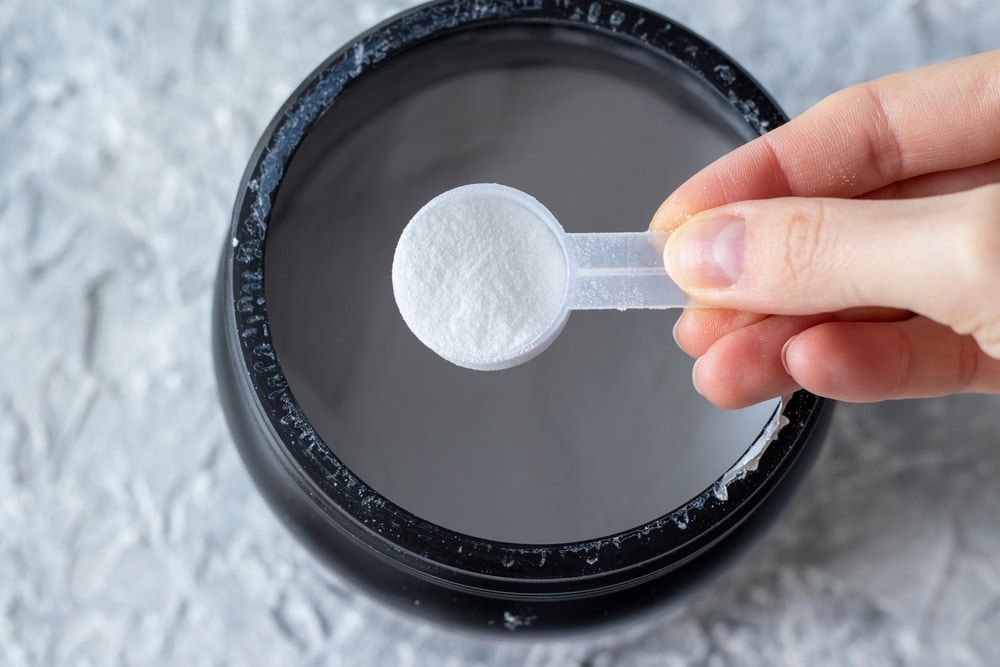
To get the benefits from supplementing with creatine, we need to take the right type and the correct dose.
What is the Best Form of Creatine?
Creatine monohydrate is the most studied and commonly used form of creatine for over 30 years. 99% of it is absorbed into tissue or excreted in the urine and unlike other forms of creatine, it doesn’t cyclize into creatinine very much. While other forms are available and marketed as being superior, this is not supported by evidence.
Micronized creatine monohydrate is the same form of creatine in smaller particles. Labels may say “micronized,” list a branded ingredient such as Creapure™, or simply say “creatine monohydrate.” That’s what we did with our Peri-Rx product (currently out of stock).
We would recommend sticking with supplements containing creatine as monohydrate or micronized creatine monohydrate that are 3rd party tested. This is a bigger problem than one might think, as less than 10% of available creatine or creatine-containing supplements on Amazon are 3rd party certified. [55]
How Much Creatine Should I Take?
Creatine monohydrate has distinct dosing protocols for loading and maintenance. Creatine loading is defined as taking supplemental creatine for 5 to 7 days, typically at doses of ~ 20 to 25 grams per day or 0.3 grams per kilogram body weight per day. This large dose is typically broken up into smaller doses taken throughout the day. The maintenance dose of supplemental creatine monohydrate is 3 to 5 grams per day or 0.05 to 0.07 grams of creatine monohydrate per kilogram body weight per day. [18]
Using a loading phase generally increases creatine content in the muscle faster than maintenance. At the end of about a month however, there’s not really a difference between using a loading phase or starting at maintenance. [56]
If an athlete is at all worried about short-term weight gain, we would not recommend a loading phase, as there’s a higher risk of loading-phase-associated weight gain. If someone has a history of gastrointestinal side effects with creatine, e.g. diarrhea or stomach pain, we would not recommend a loading phase, as this has also been associated with higher doses. [57]
Finally, if you plan to take creatine for at least a month and don’t need the benefit before then, we’d recommend starting at the maintenance dose.
When Should I Take Creatine?
Contrary to popular belief, it doesn’t really matter when someone takes supplemental creatine or what you take it with, so long as it’s taken daily. While there’s some scant evidence showing that taking creatine post-workout may work better than pre-workout, this isn’t terribly convincing in the grand scheme of things. [58]
Regarding combinations with carbohydrates, protein, and/or caffeine there isn’t much in the way of long term data showing a difference in muscle creatine content when taken with or without these co-ingredients. It is unlikely any of these ingredients alter muscle or total body levels of creatine significantly with supplementation.
Regular, daily consumption of supplemental creatine is likely best, though some studies use different frequencies of dosing. For example, taking creatine two- and three-times per week are both better than placebo for increasing muscle mass, but not different from each other. [59] Still, irregular supplementation may increase the likelihood of being a non-responder to supplemental creatine, which means not seeing a performance benefit. [60]
Speaking of responders and non-responders, the likelihood of being a responder or non responder has not been adequately investigated. The responder idea rests on two small muscle biopsy studies with 19 people between them. In the first, 3 of 8 men barely raised their muscle creatine and saw no faster phosphocreatine recovery. [61]
In the second, of 11 lifters, 3 were responders, 5 were partial responders, and 3 were non-responders. Responders tended to start with less creatine in their muscle and more type II fibers.[62] Outside of that, we don’t really know what proportion of individuals respond well to creatine supplementation.
Should You Take Creatine?
Creatine monohydrate is an option for generally healthy adults looking for a modest benefit in strength or repeated high-intensity efforts. If you have kidney disease, are pregnant or breastfeeding, or have had an adverse reaction to creatine, get individualized guidance before using it.
Related reading: Creatine on Ozempic: Does It Prevent Muscle Loss?
Resources
Several studies cited here were funded by the supplement industry or involved authors with ties to creatine manufacturers. Some industry-funded studies also reported little or no benefit.
- Kantor ED, Rehm CD, Du M, White E, Giovannucci EL. Trends in dietary supplement use among US adults from 1999-2012. JAMA. 2016;316(14):1464-1474. doi:10.1001/jama.2016.14403
- Wallimann T. Introduction. Creatine: cheap ergogenic supplement with great potential for health and disease. Subcell Biochem. 2007;46:1-16. doi:10.1007/978-1-4020-6486-9_1
- Balsom PD, Söderlund K, Ekblom B. Creatine in humans with special reference to creatine supplementation. Sports Med. 1994;18(4):268-280. doi:10.2165/00007256-199418040-00005
- Brosnan ME, Brosnan JT. The role of dietary creatine. Amino Acids. 2016;48(8):1785-1791. doi:10.1007/s00726-016-2188-1
- Wu G. Important roles of dietary taurine, creatine, carnosine, anserine and 4-hydroxyproline in human nutrition and health. Amino Acids. 2020;52(3):329-360. doi:10.1007/s00726-020-02823-6
- Cholewa J, Trexler E, Lima-Soares F, et al. Effects of dietary sports supplements on metabolite accumulation, vasodilation and cellular swelling in relation to muscle hypertrophy: a focus on “secondary” physiological determinants. Nutrition. 2019;60:241-251. doi:10.1016/j.nut.2018.10.011
- McMahon S, Jenkins D. Factors affecting the rate of phosphocreatine resynthesis following intense exercise. Sports Med. 2002;32(12):761-784. doi:10.2165/00007256-200232120-00002
- Kreider RB. Effects of creatine supplementation on performance and training adaptations. Mol Cell Biochem. 2003;244(1-2):89-94. doi:10.1023/A:1022465203458
- Wallimann T, Tokarska-Schlattner M, Schlattner U. The creatine kinase system and pleiotropic effects of creatine. Amino Acids. 2011;40(5):1271-1296. doi:10.1007/s00726-011-0877-3
- Antonio J, Candow DG, Forbes SC, et al. Common questions and misconceptions about creatine supplementation: what does the scientific evidence really show? J Int Soc Sports Nutr. 2021;18(1):13. doi:10.1186/s12970-021-00412-w
- Greenwood M, Kreider RB, Melton C, et al. Creatine supplementation during college football training does not increase the incidence of cramping or injury. Mol Cell Biochem. 2003;244(1-2):83-88. doi:10.1023/A:1022413202549
- Chang CT, Wu CH, Yang CW, Huang JY, Wu MS. Creatine monohydrate treatment alleviates muscle cramps associated with haemodialysis. Nephrol Dial Transplant. 2002;17(11):1978-1981. doi:10.1093/ndt/17.11.1978
- Gotshalk LA, Kraemer WJ, Mendonca MA, et al. Creatine supplementation improves muscular performance in older women. Eur J Appl Physiol. 2008;102(2):223-231. doi:10.1007/s00421-007-0580-y
- Antonio J, Ciccone V. The effects of pre versus post workout supplementation of creatine monohydrate on body composition and strength. J Int Soc Sports Nutr. 2013;10:36. doi:10.1186/1550-2783-10-36
- Olsen S, Aagaard P, Kadi F, et al. Creatine supplementation augments the increase in satellite cell and myonuclei number in human skeletal muscle induced by strength training. J Physiol. 2006;573(Pt 2):525-534. doi:10.1113/jphysiol.2006.107359
- Currier BS, McLeod JC, Banfield L, et al. Resistance training prescription for muscle strength and hypertrophy in healthy adults: a systematic review and Bayesian network meta-analysis. Br J Sports Med. 2023;57(18):1211-1220. doi:10.1136/bjsports-2023-106807
- Noetel M, Sanders T, Gallardo-Gómez D, et al. Effect of exercise for depression: systematic review and network meta-analysis of randomised controlled trials. BMJ. 2024;384:e075847. doi:10.1136/bmj-2023-075847
- Kreider RB, Kalman DS, Antonio J, et al. International Society of Sports Nutrition position stand: safety and efficacy of creatine supplementation in exercise, sport, and medicine. J Int Soc Sports Nutr. 2017;14:18. doi:10.1186/s12970-017-0173-z
- Rawson ES, Volek JS. Effects of creatine supplementation and resistance training on muscle strength and weightlifting performance. J Strength Cond Res. 2003;17(4):822-831. doi:10.1519/00124278-200311000-00031
- Buford TW, Kreider RB, Stout JR, et al. International Society of Sports Nutrition position stand: creatine supplementation and exercise. J Int Soc Sports Nutr. 2007;4:6. doi:10.1186/1550-2783-4-6
- Lanhers C, Pereira B, Naughton G, Trousselard M, Lesage FX, Dutheil F. Creatine supplementation and upper limb strength performance: a systematic review and meta-analysis. Sports Med. 2017;47(1):163-173. doi:10.1007/s40279-016-0571-4
- Lanhers C, Pereira B, Naughton G, Trousselard M, Lesage FX, Dutheil F. Creatine supplementation and lower limb strength performance: a systematic review and meta-analyses. Sports Med. 2015;45(9):1285-1294. doi:10.1007/s40279-015-0337-4
- Liu S, Huang N, Wu W, et al. The impact of creatine supplementation associated with resistance training on muscular strength and lean tissue mass in the aged: a systematic review and meta-analysis. Eur Rev Aging Phys Act. 2025;22(1):26. doi:10.1186/s11556-025-00392-9
- Burke R, Piñero A, Coleman M, et al. The effects of creatine supplementation combined with resistance training on regional measures of muscle hypertrophy: a systematic review with meta-analysis. Nutrients. 2023;15(9):2116. doi:10.3390/nu15092116
- Forbes SC, Candow DG, Ostojic SM, Roberts MD, Chilibeck PD. Meta-analysis examining the importance of creatine ingestion strategies on lean tissue mass and strength in older adults. Nutrients. 2021;13(6):1912. doi:10.3390/nu13061912
- Fernández-Landa J, Santibañez-Gutierrez A, Todorovic N, Stajer V, Ostojic SM. Effects of creatine monohydrate on endurance performance in a trained population: a systematic review and meta-analysis. Sports Med. 2023;53(5):1017-1027. doi:10.1007/s40279-023-01823-2
- EFSA Panel on Nutrition, Novel Foods and Food Allergens (NDA); Turck D, Bohn T, et al. Creatine and improvement in cognitive function: evaluation of a health claim pursuant to Article 13(5) of Regulation (EC) No 1924/2006. EFSA J. 2024;22(11):e9100. doi:10.2903/j.efsa.2024.9100
- Sandkühler JF, Kersting X, Faust A, et al. The effects of creatine supplementation on cognitive performance: a randomised controlled study. BMC Med. 2023;21(1):440. doi:10.1186/s12916-023-03146-5
- Prokopidis K, Giannos P, Triantafyllidis KK, Kechagias KS, Forbes SC, Candow DG. Effects of creatine supplementation on memory in healthy individuals: a systematic review and meta-analysis of randomized controlled trials. Nutr Rev. 2023;81(4):416-427. doi:10.1093/nutrit/nuac064
- Eckert I, Lima J, Dariva AA. Creatine supplementation for treating symptoms of depression: a systematic review and meta-analysis. Br J Nutr. 2025;134(11):947-959. doi:10.1017/S0007114525105588
- Lyoo IK, Yoon S, Kim TS, et al. A randomized, double-blind placebo-controlled trial of oral creatine monohydrate augmentation for enhanced response to a selective serotonin reuptake inhibitor in women with major depressive disorder. Am J Psychiatry. 2012;169(9):937-945. doi:10.1176/appi.ajp.2012.12010009
- Jeryous Fares B, Zhou C, Fabiano N, et al. The effect of creatine monohydrate on mental disorders: a systematic review of randomized controlled trials. Can J Psychiatry. 2026;71(10):741-751. doi:10.1177/07067437251408171
- Dechent P, Pouwels PJW, Wilken B, Hanefeld F, Frahm J. Increase of total creatine in human brain after oral supplementation of creatine-monohydrate. Am J Physiol. 1999;277(3):R698-R704. doi:10.1152/ajpregu.1999.277.3.R698
- Kieburtz K, Tilley BC, Elm JJ, et al. Effect of creatine monohydrate on clinical progression in patients with Parkinson disease: a randomized clinical trial. JAMA. 2015;313(6):584-593. doi:10.1001/jama.2015.120
- Hersch SM, Schifitto G, Oakes D, et al. The CREST-E study of creatine for Huntington disease: a randomized controlled trial. Neurology. 2017;89(6):594-601. doi:10.1212/WNL.0000000000004209
- Smith AN, Choi I, Lee P, et al. Creatine monohydrate pilot in Alzheimer’s: feasibility, brain creatine, and cognition. Alzheimers Dement (N Y). 2025;11(2):e70101. doi:10.1002/trc2.70101
- Naddafha S, Antonio J, Kreider RB, Stout JR. Creatine monohydrate for lean mass, strength, and bone density in postmenopausal women: a systematic review and meta-analysis. J Int Soc Sports Nutr. 2026;23(1):2668435. doi:10.1080/15502783.2026.2668435
- DelBiondo GM, Baker PA, Johnson WM, et al. Stronger through the transition: evaluating the effect of creatine and resistance training on body composition, strength, and sleep in perimenopause. Preprints. Preprint posted online October 2026. doi:10.20944/preprints202610.1273.v1
- Sales LP, Pinto AJ, Rodrigues SF, et al. Creatine supplementation (3 g/d) and bone health in older women: a 2-year, randomized, placebo-controlled trial. J Gerontol A Biol Sci Med Sci. 2020;75(5):931-938. doi:10.1093/gerona/glz162
- Chilibeck PD, Candow DG, Gordon JJ, et al. A 2-yr randomized controlled trial on creatine supplementation during exercise for postmenopausal bone health. Med Sci Sports Exerc. 2023;55(10):1750-1760. doi:10.1249/MSS.0000000000003202
- Balestrino M. Role of creatine in the heart: health and disease. Nutrients. 2021;13(4):1215. doi:10.3390/nu13041215
- Gouveia HJCB, Manhães-de-Castro R, Lacerda DC, Toscano AE. Creatine supplementation to improve the peripheral and central inflammatory profile in cerebral palsy. Clin Nutr ESPEN. 2022;52:254-256. doi:10.1016/j.clnesp.2022.11.016
- Kreider RB, Melton C, Rasmussen CJ, et al. Long-term creatine supplementation does not significantly affect clinical markers of health in athletes. Mol Cell Biochem. 2003;244(1-2):95-104. doi:10.1023/A:1022469320296
- Poortmans JR, Francaux M. Long-term oral creatine supplementation does not impair renal function in healthy athletes. Med Sci Sports Exerc. 1999;31(8):1108-1110. doi:10.1097/00005768-199908000-00005
- de Souza Almeida A, da Silva LOD, Takahasi BNA, et al. Impact of creatine supplementation on kidney health: a systematic review and meta-analysis. Int Urol Nephrol. 2026;58(12):5423-5434. doi:10.1007/s11255-026-05287-x
- de Souza E Silva A, Pertille A, Reis Barbosa CG, et al. Effects of creatine supplementation on renal function: a systematic review and meta-analysis. J Ren Nutr. 2019;29(6):480-489. doi:10.1053/j.jrn.2019.05.004
- Jagim AR, Stecker RA, Harty PS, Erickson JL, Kerksick CM. Safety of creatine supplementation in active adolescents and youth: a brief review. Front Nutr. 2018;5:115. doi:10.3389/fnut.2018.00115
- Cal Health & Safety Code §109030 (added by AB 2030, 2026 Cal Stat ch 720).
- De Guingand DL, Ellery SJ, Davies-Tuck ML, Dickinson H. Creatine and pregnancy outcomes, a prospective cohort study in low-risk pregnant women: study protocol. BMJ Open. 2019;9(1):e026756. doi:10.1136/bmjopen-2018-026756
- van der Merwe J, Brooks NE, Myburgh KH. Three weeks of creatine monohydrate supplementation affects dihydrotestosterone to testosterone ratio in college-aged rugby players. Clin J Sport Med. 2009;19(5):399-404. doi:10.1097/JSM.0b013e3181b8b52f
- Urysiak-Czubatka I, Kmieć ML, Broniarczyk-Dyła G. Assessment of the usefulness of dihydrotestosterone in the diagnostics of patients with androgenetic alopecia. Postepy Dermatol Alergol. 2014;31(4):207-215. doi:10.5114/pdia.2014.40925
- Mathews NM. Prohibited contaminants in dietary supplements. Sports Health. 2018;10(1):19-30. doi:10.1177/1941738117727736
- Tucker J, Fischer T, Upjohn L, Mazzera D, Kumar M. Unapproved pharmaceutical ingredients included in dietary supplements associated with US Food and Drug Administration warnings. JAMA Netw Open. 2018;1(6):e183337. doi:10.1001/jamanetworkopen.2018.3337
- Navarro V, Avula B, Khan I, et al. The contents of herbal and dietary supplements implicated in liver injury in the United States are frequently mislabeled. Hepatol Commun. 2019;3(6):792-794. doi:10.1002/hep4.1346
- Escalante G, Gonzalez AM, St Mart D, et al. Analysis of the efficacy, safety, and cost of alternative forms of creatine available for purchase on Amazon.com: are label claims supported by science? Heliyon. 2022;8(12):e12113. doi:10.1016/j.heliyon.2022.e12113
- Hultman E, Söderlund K, Timmons JA, Cederblad G, Greenhaff PL. Muscle creatine loading in men. J Appl Physiol (1985). 1996;81(1):232-237. doi:10.1152/jappl.1996.81.1.232
- Ostojic SM, Ahmetovic Z. Gastrointestinal distress after creatine supplementation in athletes: are side effects dose dependent? Res Sports Med. 2008;16(1):15-22. doi:10.1080/15438620701693280
- Ribeiro F, Longobardi I, Perim P, et al. Timing of creatine supplementation around exercise: a real concern? Nutrients. 2021;13(8):2844. doi:10.3390/nu13082844
- Candow DG, Chilibeck PD, Burke DG, Mueller KD, Lewis JD. Effect of different frequencies of creatine supplementation on muscle size and strength in young adults. J Strength Cond Res. 2011;25(7):1831-1838. doi:10.1519/JSC.0b013e3181e7419a
- Bemben MG, Witten MS, Carter JM, Eliot KA, Knehans AW, Bemben DA. The effects of supplementation with creatine and protein on muscle strength following a traditional resistance training program in middle-aged and older men. J Nutr Health Aging. 2010;14(2):155-159. doi:10.1007/s12603-009-0124-8
- Greenhaff PL, Bodin K, Söderlund K, Hultman E. Effect of oral creatine supplementation on skeletal muscle phosphocreatine resynthesis. Am J Physiol. 1994;266(5):E725-E730. doi:10.1152/ajpendo.1994.266.5.E725
- Syrotuik DG, Bell GJ. Acute creatine monohydrate supplementation: a descriptive physiological profile of responders vs. nonresponders. J Strength Cond Res. 2004;18(3):610-617. doi:10.1519/12392.1
- Lak M, Forbes SC, Ashtary-Larky D, et al. Does creatine cause hair loss? A 12-week randomized controlled trial. J Int Soc Sports Nutr. 2025;22(sup1):2495229. doi:10.1080/15502783.2025.2495229

1 Comment
Pingback: Science Finds that Dairy May Not Lead to Excess Fat as First Thought - healthlifestylee.blog