

Scientists discover a surprising clue to autism’s origins hidden in the placenta
Date:
November 3, 2026ered an unexpected connection between inflammation during pregnancy, placental damage, and autism-like traits in male mice, while females appeared naturally protected. The discovery could help explain why autism is diagnosed more frequently in boys and reveal new opportunities for early intervention.
Share:
FULL STORY
Scientists are still working to understand why autism develops. Genetics are known to play a major role, but researchers have also found that conditions during pregnancy can influence the likelihood of autism spectrum disorder.
A new study from Cold Spring Harbor Laboratory (CSHL) has uncovered a surprising connection between inflammation during pregnancy, changes in the placenta, and the development of autism-like traits in male mice. The findings suggest that certain developmental disruptions may begin much earlier than previously recognized, potentially offering new clues about autism’s origins.
To truly understand autism spectrum disorder, we have
“To truly understand autism spectrum disorder, we have to look beyond the brain,” CSHL Associate Professor Lucas Cheadle says. “Our work suggests that maternal immune activation and changes within the placenta are a gateway to autism for some unique individuals.”
Scientists Identify an Early Window of Vulnerability
To investigate how inflammation affects fetal development, Cheadle and his colleagues triggered an immune response in pregnant mice at different stages of pregnancy. They used a substance that mimics the immune system’s reaction to a viral infection without actually introducing a virus.
The researchers discovered that mouse fetuses were especially vulnerable when inflammation occurred 12.5 days into pregnancy. According to Irene Sanchez Martin, a postdoctoral researcher in Cheadle’s laboratory, approximately one-third of the fetuses showed developmental abnormalities within just 24 hours.
Scientists have investigated the effects of maternal immune
Scientists have investigated the effects of maternal immune activation for decades, but these findings reveal signs of developmental disruption earlier than researchers had previously observed.
Even more striking was the difference between male and female fetuses. Across every experiment, autism-like traits appeared only in males, while females continued developing normally.
This unexpected distinction could provide insight into why autism is diagnosed substantially more often in boys than girls. What makes the finding especially intriguing is how early the difference appeared, before many of the biological changes normally associated with sex-specific development.
It’s really fascinating, because we’re looking
“It’s really fascinating, because we’re looking at an age which precedes hormonal surges. It precedes sexual differentiation in the brain and many other regions. So, it’s surprising there would be a sex-based difference this early.”
A Surprising Connection Between the Placenta and Autism
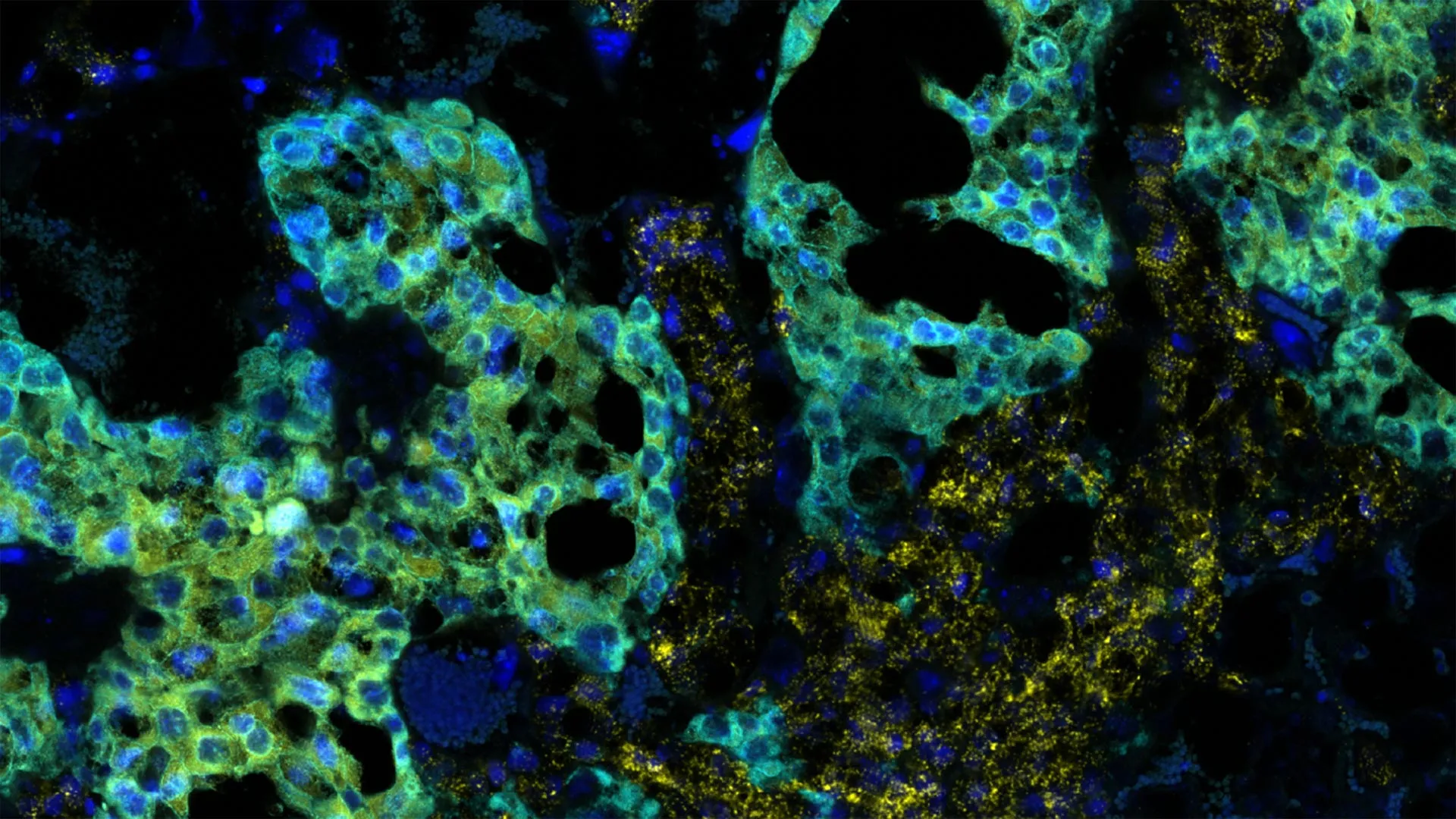
To determine why some developing mice were affected while others appeared protected, Cheadle and Sanchez Martin examined the placenta, the organ that connects a developing fetus to its mother and supports its growth throughout pregnancy.
Their attention centered on specialized cells called spongiotrophoblasts, which occupy a region of the mouse placenta where maternal and fetal cells interact.
In fetuses that developed normally, this part
In fetuses that developed normally, this part of the placenta remained healthy. However, male fetuses showing developmental abnormalities also had visible damage to these specialized cells.
Spongiotrophoblasts play an important role in helping the mother’s immune system tolerate the developing fetus. This protection is essential because the fetus carries genetic material from both parents and is not genetically identical to the mother.
The researchers found that maternal immune activation could interfere with this protective function. When these placental cells become damaged, the mother’s immune response may begin affecting the developing fetus in harmful ways.
Why Female Fetuses May Have a Hidden Advantage
The findings raise another intriguing question: Why
The findings raise another intriguing question: Why were male fetuses vulnerable while females appeared unaffected?
One possibility is that male embryos produce distinctive proteins that can trigger an unfavorable maternal immune response following a viral infection. Another explanation is that female embryos possess some form of protection that helps them withstand inflammation during this sensitive developmental period.
Cheadle says, “A protective mechanism may exist within the female that could be harnessed to help the male. We’re trying to understand how autism emerges in both sexes,” he explains. “The evidence says that there are potentially different mechanisms.”
These possibilities suggest that biological pathways involved
These possibilities suggest that biological pathways involved in autism-like development may differ between males and females. Understanding those differences could help researchers identify why some individuals are more vulnerable to certain environmental influences during pregnancy.
Cheadle’s team plans to investigate both male and female mice more closely to uncover the mechanisms responsible for these contrasting responses. Their work could eventually identify new targets for treatments and lead to strategies for intervening earlier in developmental processes associated with autism.
Although the findings come from experiments in mice and do not establish that the same mechanisms cause autism in humans, they highlight an unexpected possibility: Important clues to autism’s earliest development may lie not only in the brain, but also in the placenta and its interactions with the maternal immune system.
Materials provided by Cold Spring Harbor Laboratory
Materials provided by Cold Spring Harbor Laboratory. Note: Content may be edited for style and length.
- Irene Sanchez-Martin, Bharti Kukreja, Paige Henderson, Qianyu Lin, Daniel DiMartino, Valerie Bagan, Justin Park, Brian T. Kalish, Lucas Cheadle. Maternal-fetal immune conflict contributes to male-specific impairments in a mouse model of neurodevelopmental disorders. Science Advances, 2026; 12 (38) DOI: 10.1126/sciadv.aeg0779
Cold Spring Harbor Laboratory. “Scientists discover a surprising clue to autism’s origins hidden in the placenta.” ScienceDaily. ScienceDaily, 3 November 2026. <www.sciencedaily.com/releases/2026/11/261102202824.htm>.
Cold Spring Harbor Laboratory. (2026, November 3). Scientists discover a surprising clue to autism’s origins hidden in the placenta. ScienceDaily. Retrieved November 3, 2026 from www.sciencedaily.com/releases/2026/11/261102202824.htm
Cold Spring Harbor Laboratory. “Scientists discover a surprising clue to autism’s origins hidden in the placenta.” ScienceDaily. www.sciencedaily.com/releases/2026/11/261102202824.htm (accessed November 3, 2026).
RELATED STORIES
