


Bill McAdams, a 45-year-old travel nurse from Holiday, Florida, was uninsured last year when he experienced a stroke. He hadn’t been able to afford his agency’s health plan, which would have cost $3,600 monthly to cover him and his wife. The hospital that treated him sent him a bill for $93,000.
Janet Marx, 56, of Milford, Connecticut, has doubled up on insurance coverage through her husband’s employer and Medicare because she has lupus and fibromyalgia, disabling chronic conditions. Still the couple sold their home, the house where Marx grew up, to afford the costs of their medical care.
Sheila Robinson, 61, in District Heights, Maryland, has a $10,000 deductible on her Affordable Care Act plan, so she tries to negotiate cheaper self-pay options when she sees a doctor. She puts the $659 monthly premium on her credit card, even though she knows not paying the bill in full means she must pay interest.
I am just afraid to even go
“I am just afraid to even go to the doctor,” said Robinson, who has arthritis, a pinched nerve in her neck, and high blood pressure. “Every month, I am in the hole.”
This year, KFF Health News has chronicled how rising healthcare costs are upending the lives of Americans. Reporters have heard from more than 130 people across the U.S. who are trying to afford their premiums, copayments, prescriptions, and medical bills even as housing, energy, and food costs swell. People told us they are forgoing health insurance coverage, rationing their medications, cutting back on doctor visits, and putting off health procedures.
“We’re not talking about the uninsured or those who are low-income who are struggling now,” said Rebecca Kirch, executive vice president at the National Patient Advocate Foundation. “Now it’s become an all-of-us issue.”
While healthcare costs have largely grown faster than
While healthcare costs have largely grown faster than the overall economy for decades, they’ve escalated at a dizzying pace recently. In 2023 and 2024, health spending hit its highest growth rates in two decades excluding 2020’s covid-fueled surge.
The prices that hospitals, doctors, and other clinicians charge have increased, along with how much care people are getting. Overall health spending hit nearly $5.3 trillion in 2024, up from $3 trillion a decade earlier, according to federal data.
American health costs, expected to continue growing faster than the overall economy and help fuel it, are projected to hit 20% of the nation’s gross domestic product by 2032, up from just under 19% today.

Americans are shouldering higher insurance premium payments
At the same time, Americans are shouldering higher insurance premium payments and other out-of-pocket costs. Low-income and middle-class people with health conditions are feeling the brunt.
The GOP-led Congress decided against extending covid pandemic-era subsidies for Affordable Care Act plans and cut billions from other federal health programs to offset the costs of tax cuts for wealthy Americans and heightened immigration enforcement, arguing that government insurance programs are rife with fraud and waste.
Despite $500 rebate checks sent by President Donald Trump to fewer than 5% of higher-income ACA marketplace enrollees, his administration has been expanding access to insurance plans with higher deductibles and lower premiums that push more costs to patients if they need care. Employers are passing along rising healthcare costs to employees, and clinicians are charging patients up front.
It’s not all bad news for consumers: Prescription
It’s not all bad news for consumers: Prescription drugs recorded their biggest price drop in decades this year. The Biden and Trump administrations both worked to help lower them amid consumer pressure.
But many say they’re still feeling the pain of rising prices. Ahead of the November congressional midterm elections, healthcare costs continue to top a list of the public’s worries about affordability, according to polling conducted in mid-September by KFF, a health information nonprofit that includes KFF Health News. Nine in 10 Democratic respondents and three-quarters of Republican ones said the U.S. healthcare system needs either a complete overhaul or major changes.
She Sold Her Childhood Home To Afford Healthcare
Janet Marx, 56
Milford, Connecticut
Janet Marx is on Medicare and has health insurance through her husband’s employer plan. She also receives Social Security disability income because she has fibromyalgia and the disabling autoimmune condition lupus. But she and her husband still struggle to afford their out-of-pocket medical costs. She’s so frustrated about high healthcare costs that she was a guest speaker at an online event for the National Patient Advocate Foundation. Having to scrounge to cover a recent string of $80 copayments for in-home physical therapy led her to an “aha moment,” she said. She sold her home, the place where she grew up, and the couple moved into an apartment.
Things are just getting too expensive to afford
“Things are just getting too expensive to afford the house and health problems,” she said.
— Renuka Rayasam and Sam Whitehead
His Premiums Went Up. Now He’s Cutting Back To Make Ends Meet.
Damien Waikoloa, 35
Honolulu, Hawai‘i
Damien Waikoloa wanted to keep health insurance to manage several chronic conditions, even though premium payments for his ACA plan went up to more than $400 a month, from around $240 a month last year. But keeping his coverage meant the small-business owner in Honolulu had to cut back on other spending. He’s trying to reduce the costs of running his business, including considering lowering his own pay. And he’s cutting back on dining out and traveling to visit friends and family in Seattle and California.
“Things like saving for a down payment for a house or even starting a family have completely gone out the window,” he said.
‘Profit Margins Everywhere’
The typical American family spends about $5,600
The typical American family spends about $5,600 a year, or 9% of their income, on health insurance premiums, out-of-pocket healthcare costs, and taxes that fund health programs, according to the Peterson-KFF Health System Tracker. But overall, the nation’s annual healthcare spending comes to the equivalent of more than $15,400 per person.
The reason behind those high U.S. healthcare costs is straightforward: The prices that clinicians, hospitals, drugmakers, and other players in the health system charge are high. For example, while doctors in the U.S. perform about a third as many inpatient knee replacements as in other wealthy nations, the cost per surgery is higher than in most of those countries, according to the Peterson-KFF tracker.
More recently, multiple trends have driven that price growth in the U.S., health economists and policy researchers said. Hospitals are merging and using their consolidated market power to charge more. New technologies and therapeutics, such as GLP-1s for weight loss and diabetes, have high price tags. Inflation and the Trump administration’s tariffs are layering costs onto everything from latex gloves to medical devices. And higher numbers of uninsured Americans means fewer people to bear more of the costs.
It’s really everything all together at once, said
“It’s really everything all together at once,” said Christopher Whaley, a Brown University health policy researcher.
Health Spending Surpassed $15K per Person in 2024
The increase is not necessarily because we’re sicker, but because of increased prices.
Note: Dollar amounts are adjusted for inflation and shown in 2024 dollars.penditure data; Bureau of Economic Analysis’ personal consumption expenditure data
Credit: Lydia Zuraw/KFF Health News
Why the U.S. has high healthcare prices, however, is more complicated. Whaley and other health economists point to how the American healthcare system is structured and financed. Clinician charges and administrative costs are higher in the U.S. than in other countries. The U.S. doesn’t centrally set all prices for services, ration care, or control for quality.
In most local American markets, insurers negotiate prices
In most local American markets, insurers negotiate prices with hospitals, clinicians, and drugmakers, which then charge for every test, procedure, or medicine regardless of its outcome. More than half of all healthcare payments were based on this fee-for-service model, according to a 2022 research brief published in the journal Health Affairs. Under this model, hospitals and doctors make more as they bill more.
The complexity of different billing systems, rates, insurers, and networks adds to the price tag. The cost of sending out bills and managing paperwork can be hundreds of billions of dollars. Insurers try to keep medical costs in check, in part by limiting what they’ll reimburse. They also take their own cut along the way.
“There’s profit margins everywhere, and there are varying degrees of financial incentives throughout the healthcare system,” Whaley said.
The incentives, however, don’t necessarily promote better health.
Steven Ullmann, director of the Center for Health
Steven Ullmann, director of the Center for Health Management and Policy at the University of Miami Business School, where he’s a professor, said that the country’s health system encourages expensive treatments over low-cost preventive care. He said that keeps people locked into seeing clinicians because they’re in their insurance networks, not necessarily because they produce better outcomes.
Even though people in the U.S. pay more for care than in other countries, Ullmann said higher prices don’t always mean better quality. For example, he said the prices for prenatal ultrasounds in Orlando vary widely with no obvious difference in quality.
“Same city, same procedure,” Ullmann said. “That is a reflection of a broken system.”
And those high prices can keep people from seeking needed services.
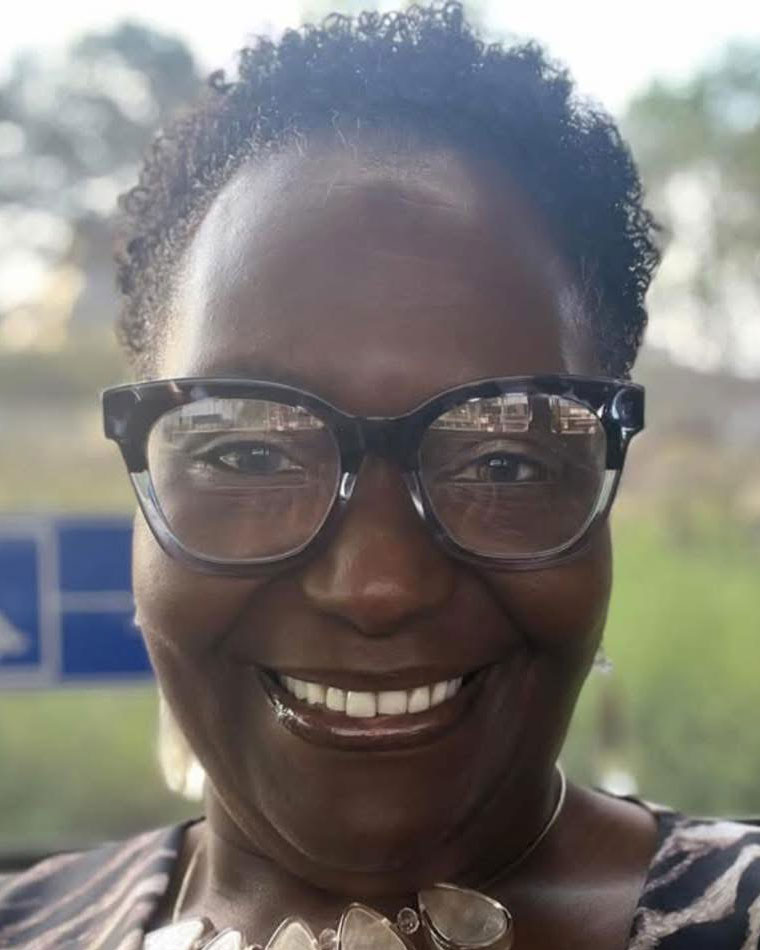
In 2025, a health system garnished the wages of Carmilla Collins, 52, of Omaha, Nebraska.
Collins, a single mother, said she didn’t question the tests or medicines doctors ordered when she got diagnosed with thyroid disease or received regular preventive procedures such as a colonoscopy — until she found herself in debt. The hospital hired a collection agency to sue her for unpaid medical bills that she accrued when she was both insured and uninsured. Then a court allowed the debt collector to take hundreds of dollars out of her paycheck.
Collins remembered being “spitting mad.” She almost couldn’t make rent.
I’m working two jobs, she said
“I’m working two jobs,” she said. “And I’m going to be homeless because of this noose that’s around my neck.”
Collins eventually qualified for financial assistance from the hospital, but she said she put off thyroid surgery for four months even as a goiter swelled against her throat, making it hard for her to eat. She had health coverage through her employer at that point but was worried about affording the costs of her deductible and other fees. Eventually, she said, her health declined until she could no longer put off the surgery.
“I equated taking care of my health with debt that I couldn’t afford,” she said.
How to slow rising costs — and overall
How to slow rising costs — and overall U.S. health spending — has long vexed elected leaders and policymakers.
That’s because reducing overall healthcare costs for patients means doctors, hospitals, drug companies, insurers, or other players across the health system would get paid less.
“For the most part, health spending for us is income to someone else,” said Zack Cooper, a health economist at Yale University.
Eliminating administrative complexity or setting price caps —
Eliminating administrative complexity or setting price caps — which is how some countries lower overall costs — faces steep odds at the federal level. Since 1998, the health sector has spent more than $14 billion lobbying members of Congress in both parties a nonprofit that tracks money in U.S. politics
After Lynn Ludaway, 40, was diagnosed with multiple sclerosis three years ago, she said, she considered divorcing her husband just to make her eligible for aid to cover medical costs, even though they wanted to stay together.
She initially had coverage through her husband’s job but still faced large out-of-pocket bills. Ludaway, who lives in Evanston, Illinois, also racked up expenses from navigating life with a disabling health condition, such as paying for Uber rides and a cane as her mobility declined. Her medical bills stretched into the tens of thousands of dollars.
I thought I was well prepared
“I thought I was well prepared for an emergency,” said Ludaway, who gave up her consulting business and raided her savings and retirement accounts to pay for tests and treatment. “Nobody can prepare for this.”
She now pays a $500 monthly premium for coverage through Illinois’ ACA marketplace. But because of her husband’s job, the couple makes too much to qualify for state or federal assistance.
“I am in this weird in-between,” she said. “I need to rest to heal, but I need to work to live.”
Instead Ludaway relies on private financial aid programs,
Instead Ludaway relies on private financial aid programs, through foundations and the hospital system where she gets her care. She forgoes what she can’t afford, including dental and mental healthcare. She said she must be even more budget-conscious than she was in college.
“Broke undergrad has nothing on chronic illness,” she said.
This Therapist Accepts Health Insurance. But Affording It for Herself Is Hard.
Shayna Sanders, 45
New Haven, Connecticut
Shayna Sanders, a marriage and family therapist, has bought health insurance through her state’s Obamacare marketplace for more than a decade. In that time, her monthly premium payments have climbed to close to $1,000. She said she has a “love-hate” relationship with insurance companies: They help her make her living by covering her patients’ appointments, but their coverage feels increasingly out of reach for her.
“Some of the health insurance plans that they have, I probably couldn’t afford them myself due to the cost.”
Many current federal healthcare proposals focus on shifting
Many current federal healthcare proposals focus on shifting costs rather than lowering them, and ideological differences about who should bear those costs deeply divide lawmakers.
The GOP has prioritized tax and spending cuts, which put the cost more on patients than taxpayers and are expected to boost the number of uninsured, to eliminate what they claim is pervasive fraud in government health programs. Last year, Democrats fought to extend enhanced subsidies for marketplace plans, which would buffer patients somewhat from premium hikes by pushing the bill to taxpayers.
Some progressive Democrats, including candidates winning primaries in battleground states, are reviving calls for “Medicare for All,” versions of which would create one centralized public insurer. Such a system could end out-of-pocket costs and provide major relief for patients such as Ludaway, but not necessarily cut overall health spending. Clinicians, hospitals, drugmakers, and other groups could still lobby for high prices, which taxpayers would then be on the hook to pay.
Some ideas with broad bipartisan support, such
And some ideas with broad bipartisan support, such as forcing hospitals and doctors to publicly post medical prices, have had little effect on costs.
Policy debates about increasing access to coverage and improving quality of care should also focus on overall health spending, not just who’s picking up the tab, said Michael Chernew, a professor of healthcare policy at Harvard Medical School.
“We don’t have some rich uncle that’s coming and just paying for all of our care. One way or another, collectively we are paying,” Chernew said. “It’s just we’re shifting who is paying, how much we’re paying, and through which mechanisms we pay.”
Despite trillions in health spending, the nation’s system
Despite trillions in health spending, the nation’s system leaves millions of uninsured and underinsured people unable to afford care. About 27 million people — nearly 10% of the population under age 65 — didn’t have health insurance in 2024 And the nonpartisan Congressional Budget Office projects that number to grow by 10 million or more by 2034 because of policy and funding changes

Melody Stephens in Berryville, Arkansas, became uninsured when she dropped her ACA marketplace coverage for this year after the monthly premium payments for her and her younger daughter jumped from just over $200 to more than $2,000. Stephens, 55, a geriatric nurse at an assisted living facility, said she also couldn’t afford the $1,000 monthly premium payment for her employer-sponsored plan.
“There was just no way I could do that,” Stephens said. “That was just not feasible.”
Stephens first got an ACA plan after she
Stephens first got an ACA plan after she was diagnosed with anal cancer about a decade ago. Even with coverage, she filed for bankruptcy two years ago. While her plan largely covered cancer care, it left her with big bills for treatment of the side effects of radiation.
Now she and her daughter are relying on financial assistance and cutting back on care. When her daughter, a college student, had some surgeries, the hospitals wrote off the bills, Stephens said. But they still owe money for tests and treatments.
Stephens also stopped taking a GLP-1 that she was prescribed for diabetes and a medication for nerve pain because of the cost. Stephens can’t afford a colostomy, so she lives with incontinence, she said.
She said she wishes lawmakers in Washington would
She said she wishes lawmakers in Washington would fix the healthcare system. “They just seem to fight,” she said.
A Tipping Point?
Next year, insurers say they expect to hike premiums for ACA marketplace plans by 15%, the second year in a row of double-digit premium increases. Employer health costs are expected to rise 9.5%, likely increasing the burden on workers.
Policy researchers and economists who have studied health costs say they are skeptical that federal lawmakers are ready to tackle overall health spending, even as the midterm elections loom.
Pressures are building, said Michael Cannon, a health
But pressures are building, said Michael Cannon, a health policy analyst at the libertarian Cato Institute. “We cannot stay on this path forever,” he said.
Health Spending Grows Faster Than the Overall Economy
As of 2024, health spending had increased by 287% since 2000 while GDP had increased 186% in the same time period. The federal government projects growth in healthcare spending will continue to outpace the overall economy’s growth rate.
National health expenditures
Gross domestic product
Note: Cumulative percentage change calculations based on nonadjusted dollar amountspenditure data
Credit: Lydia Zuraw/KFF Health News
nNational health expendituresnn nGross domestic product n, url:
nNational health expendituresnn nGross domestic product
n”,
“url”: “https://public.flourish.studio/visualisation/30462040/”,
“creator”: {
“@type”: “Organization”,
“name”: “KFF”
},
“distribution”: [
{
“@type”: “DataDownload”,
“encodingFormat”: “text/csv”,
“contentUrl”: “data:text/csv;charset=utf-8,0%2C1%2C2%2C3%2C4%0AYear%2C%22Growth%20in%20national%20health%20expenditures%20since%202000%22%2C%22Growth%20in%20GDP%20since%202000%22%2C%22Projected%20growth%20in%20national%20health%20expenditures%20since%202000%22%2C%22Projected%20growth%20in%20GDP%20since%202000%22%0A2000%2C0%2C0%2C%2C%0A2001%2C8.59%2C3.23%2C%2C%0A2002%2C19.43%2C6.61%2C%2C%0A2003%2C29.65%2C11.76%2C%2C%0A2004%2C38.75%2C19.18%2C%2C%0A2005%2C48.43%2C27.20%2C%2C%0A2006%2C58.50%2C34.77%2C%2C%0A2007%2C68.78%2C41.20%2C%2C%0A2008%2C75.87%2C44.08%2C%2C%0A2009%2C82.50%2C41.24%2C%2C%0A2010%2C89.62%2C46.81%2C%2C%0A2011%2C96.04%2C52.18%2C%2C%0A2012%2C103.95%2C58.56%2C%2C%0A2013%2C109.43%2C64.67%2C%2C%0A2014%2C120.50%2C71.77%2C%2C%0A2015%2C132.73%2C78.47%2C%2C%0A2016%2C143.49%2C83.44%2C%2C%0A2017%2C153.75%2C91.32%2C%2C%0A2018%2C166.46%2C101.51%2C%2C%0A2019%2C178.72%2C110.13%2C%2C%0A2020%2C207.96%2C108.52%2C%2C%0A2021%2C220.61%2C131.45%2C%2C%0A2022%2C235.97%2C154.17%2C%2C%0A2023%2C260.77%2C171.31%2C%2C%0A2024%2C286.65%2C185.81%2C%2C%0A2025%2C%2C%2C314.72%2C200.14%0A2026%2C%2C%2C340.77%2C214.54%0A2027%2C%2C%2C361.59%2C226.50%0A2028%2C%2C%2C385.43%2C238.41%0A2029%2C%2C%2C410.30%2C251.10%0A2030%2C%2C%2C435.89%2C264.62%0A2031%2C%2C%2C463.21%2C279.02%0A2032%2C%2C%2C491.47%2C294.00%0A2033%2C%2C%2C523.42%2C309.56%0A2034%2C%2C%2C557.07%2C325.74%0A”
}
],
“additionalProperty”: [
{
“@type”: “PropertyValue”,
“name”: “note”,
“value”: “Note: Cumulative percentage change calculations based on nonadjusted dollar amountsn
nSource: Centers for Medicare & Medicaid Services’ national health expenditure data n
nCredit: Lydia Zuraw/KFF Health News”
}
]
}
The pain of high costs is felt throughout the economy, including by employers and state governments that help foot the bill for medical care. That reality is giving way to policy proposals that buck some past political positions.
Last year, the GOP-led legislature in Indiana capped how much some nonprofit hospitals can charge patients covered by employer health plans. Starting in 2029, five of the state’s largest nonprofit hospitals risk losing their tax-exempt status if they charge those patients more than the price limits. And this year, Texas Republican Gov. Greg Abbott proposed capping certain drug prices. Both cost-control efforts, along with Trump’s plans to lower prescription drug prices, are traditionally more the domain of left-leaning politicians.
For McAdams, the nurse in Florida, dealing
For McAdams, the nurse in Florida, dealing with high health costs took a physical toll. He believes a subsequent stroke he experienced was caused by the stress of haggling over his hospital bill.
After his first stroke in September 2025, McAdams bought insurance, but it didn’t cover preexisting conditions. In March, he started experiencing problems with his vision and balance. He went to an urgent care center, instead of the emergency room.
“I was so afraid of dealing with the billing issues again that I did not want to go to the emergency room,” he said.
After talking with the hospital regarding his stroke
Then, after talking with the hospital regarding his stroke bill later that month, he said, he experienced problems again and landed back in the ER anyway — with the second stroke.
Now he is applying for Social Security Disability Insurance because he can no longer work as a nurse. The health system eventually lowered his total bill to $50,436 — but that’s still more than he can afford without a steady salary. He and his wife are also expecting a baby this fall.
McAdams was once proud to be part of the nation’s healthcare system, which saved his life and those of so many others. But the financial stress has changed his view. Now, McAdams said, his trust in it is gone.
He Said Medical Debt Caused His Second Stroke
Bill McAdams, 45
Holiday, Florida
In March, Bill McAdams started experiencing problems
In March, Bill McAdams started experiencing problems with his vision and balance and went to an urgent care center, instead of the emergency room. He said he feared getting saddled with medical bills on top of one he already had from a stroke he had experienced while uninsured months earlier. Later that month, after getting upset while talking with the hospital regarding the bill from his stroke, he said, he experienced problems again and landed back in the ER — with a second stroke. Now he owes even more money.
“Due to all the stress, it delayed me in seeking care,” he said. “I didn’t want to deal with the stress of more hospital bills.”
— Sam Whitehead and Renuka Rayasam
Are you struggling to afford your health insurance? Have you decided to forgo coverage?Click hereto contact KFF Health News and share your story.
