

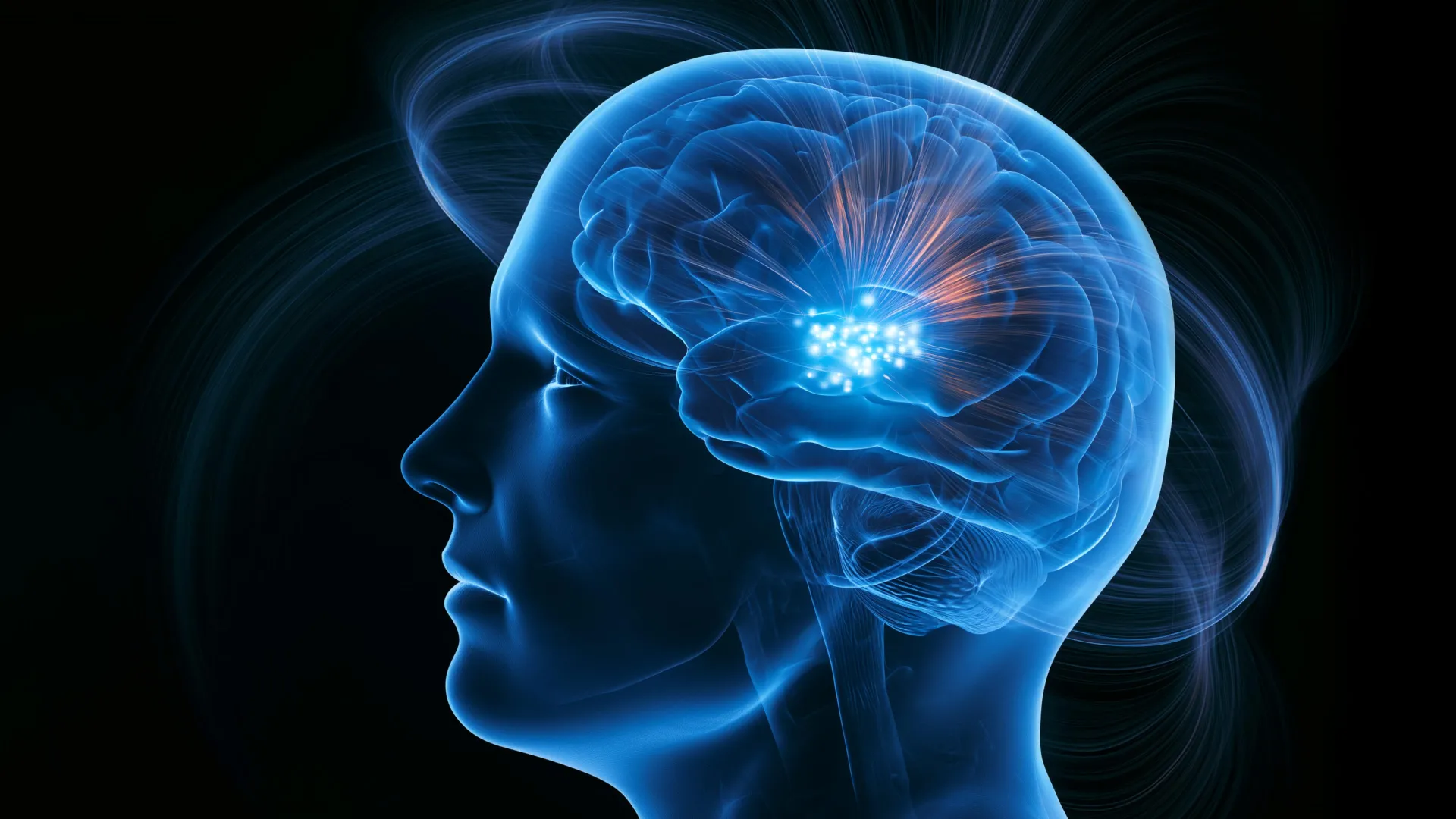
An international research team has developed a new technique that uses magnetic fields and tiny particles to stimulate regions deep inside the brain, potentially opening the door to a less invasive treatment for Parkinson’s disease. In experiments involving mice with Parkinson’s-like symptoms, the approach significantly improved movement problems without requiring permanently implanted electrodes.
The technique involves injecting specially designed magnetic nanoplatelets into a targeted area of the brain. When exposed to an external magnetic field, these particles generate tiny forces that activate nearby nerve cells. Unlike conventional brain stimulation treatments, which rely on surgically implanted electrodes, the new approach uses magnetic forces to influence brain activity. The findings, published in Advanced Science, come from researchers at Friedrich-Alexander-Universität Erlangen-Nürnberg (FAU), RWTH Aachen, and the Universities of Maastricht (the Netherlands) and Leuven (Belgium).
Why Parkinson’s Treatment Often Requires Brain Implants
Parkinson’s disease develops as brain cells responsible for producing dopamine gradually break down. Dopamine is a chemical messenger that plays a vital role in controlling movement. As its levels decline, communication within the brain’s movement circuits becomes disrupted, contributing to tremors and other motor difficulties.
For some patients, deep brain stimulation can help
For some patients, deep brain stimulation can help control these symptoms. This treatment uses a device known as a brain pacemaker, which is implanted beneath the collarbone and connected to electrodes placed deep inside the brain. The electrodes deliver electrical stimulation to a region called the subthalamic nucleus (STN for short), helping to modify abnormal activity in the brain circuits responsible for movement.
Although this treatment can provide substantial relief, it requires a complex surgical procedure and does not work for everyone.
“The procedure is relatively complex, however, and not always successful,” explains Prof. Dr. Danijela Gregurec from the Department of Chemistry and Pharmacy at FAU. “This puts many Parkinson’s patients off, and not all patients are suitable candidates for one of these pacemakers.”
The researchers believe magnetic stimulation could eventually provide
The researchers believe magnetic stimulation could eventually provide another option, allowing doctors to influence the same deep brain structures without leaving electrodes permanently implanted.
How Tiny Magnetic Particles Stimulate Brain Cells
The new technology takes advantage of the ability of certain nerve cells to detect physical pressure and mechanical forces.
“We use magnetic nanoparticles that we implant in the brain,” Gregurec explains. “They have a special shape and a magnetic structure. They were developed in order to transform magnetic fields into tiny mechanical forces.”
Rather than sending electrical pulses directly into
Rather than sending electrical pulses directly into the brain, the technique uses these particles to produce extremely small physical movements when a magnetic field is applied.
“The traditional method establishes an electrical connection to the brain,” she says. “In contrast, we use the neurons’ natural mechanosensors to influence regions deep within the brain.”
The process works by gently changing the shape of nearby nerve cell membranes. Imagine pressing a finger against an inflated balloon and creating a small indentation in its surface. The magnetic particles produce a similar effect on a microscopic scale.
This slight deformation opens specialized channels
This slight deformation opens specialized channels in the cell membrane that respond to mechanical pressure. Once opened, these channels allow electrically charged particles called ions to enter the nerve cells, changing their electrical activity and providing a way to stimulate the targeted brain circuits.
Magnetic Brain Stimulation Improves Movement in Mice
To investigate whether the technology could relieve Parkinson’s symptoms, the international research team conducted experiments using mice with damage to the same types of dopamine-producing nerve cells affected by the disease in humans. This damage caused movement difficulties resembling those seen in Parkinson’s patients.
“Together with our partners from Maastricht, we injected magnetic nanoparticles developed here at FAU into the animals’ subthalamic nucleus,” Gregurec explains. “That is the very region in the brain that is also an important target for conventional deep brain stimulation in Parkinson’s disease.”
The researchers used precise stereotactic injection techniques
The researchers used precise stereotactic injection techniques to deliver the particles to the intended location. These methods rely on carefully calculated three-dimensional coordinates to guide instruments into specific brain structures. Accurate placement was particularly important because the treatment needed to affect the correct neural circuits involved in movement.
After the particles were positioned, the researchers applied an external magnetic field. The results were encouraging: the mice showed significant improvements in their movement deficits.
“The effect is roughly equivalent to what we would have expected after implanting a brain pacemaker,” says Gregurec.
The findings suggest that magnetic nanoparticles could provide
The findings suggest that magnetic nanoparticles could provide a different way to achieve some of the benefits of conventional deep brain stimulation, without the need for permanently implanted electrodes.
Could Future Parkinson’s Treatments Use Magnetic Headbands?
Another encouraging finding involved how the brain responded to the implanted particles over time. The magnetic nanoparticles remained in place throughout an observation period lasting several months, and the researchers found no signs of inflammation. This suggests that the particles were well tolerated during the experiments.
However, delivering the particles still required an injection directly into the brain. Gregurec and her colleagues are now investigating ways to make the procedure even less invasive.
One possibility is to develop particles that could
One possibility is to develop particles that could be injected into the bloodstream and then travel into the brain by crossing the blood-brain barrier. This protective boundary normally prevents many substances circulating in the blood from entering brain tissue. Finding a way to deliver the particles across it could eliminate the need for direct brain injections.
The researchers are also exploring compact wearable devices capable of generating the magnetic fields needed for stimulation. One possibility is a headband that patients could put on themselves, potentially making treatment more convenient and adjustable.
These ideas remain at an early stage, and the researchers expect that several more years of development will be needed before the technology could be considered for clinical use.
Nevertheless, we are convinced that the new method
“Nevertheless, we are convinced that the new method has enormous potential,” Gregurec states. “It is not only considerably simpler and cheaper than a conventional brain pacemaker, it is probably also more flexible. Adjusting the parameters of the magnetic field would allow us to control the nanoparticles more accurately.”
Beyond its potential medical applications, the technology could also become a valuable scientific tool. By allowing researchers to stimulate nerve cells through carefully controlled mechanical forces, it offers a new way to explore how physical changes at the cellular level influence brain activity.
Although the treatment has so far been demonstrated only in animals, its ability to improve movement without permanently implanted electrodes represents a promising step toward new approaches to Parkinson’s disease and brain stimulation.
