

Written byGarett Reid | NSCA, CSCS, CISSN, M.S.E.S.S
Fact checked by Tyler DiGiovanni
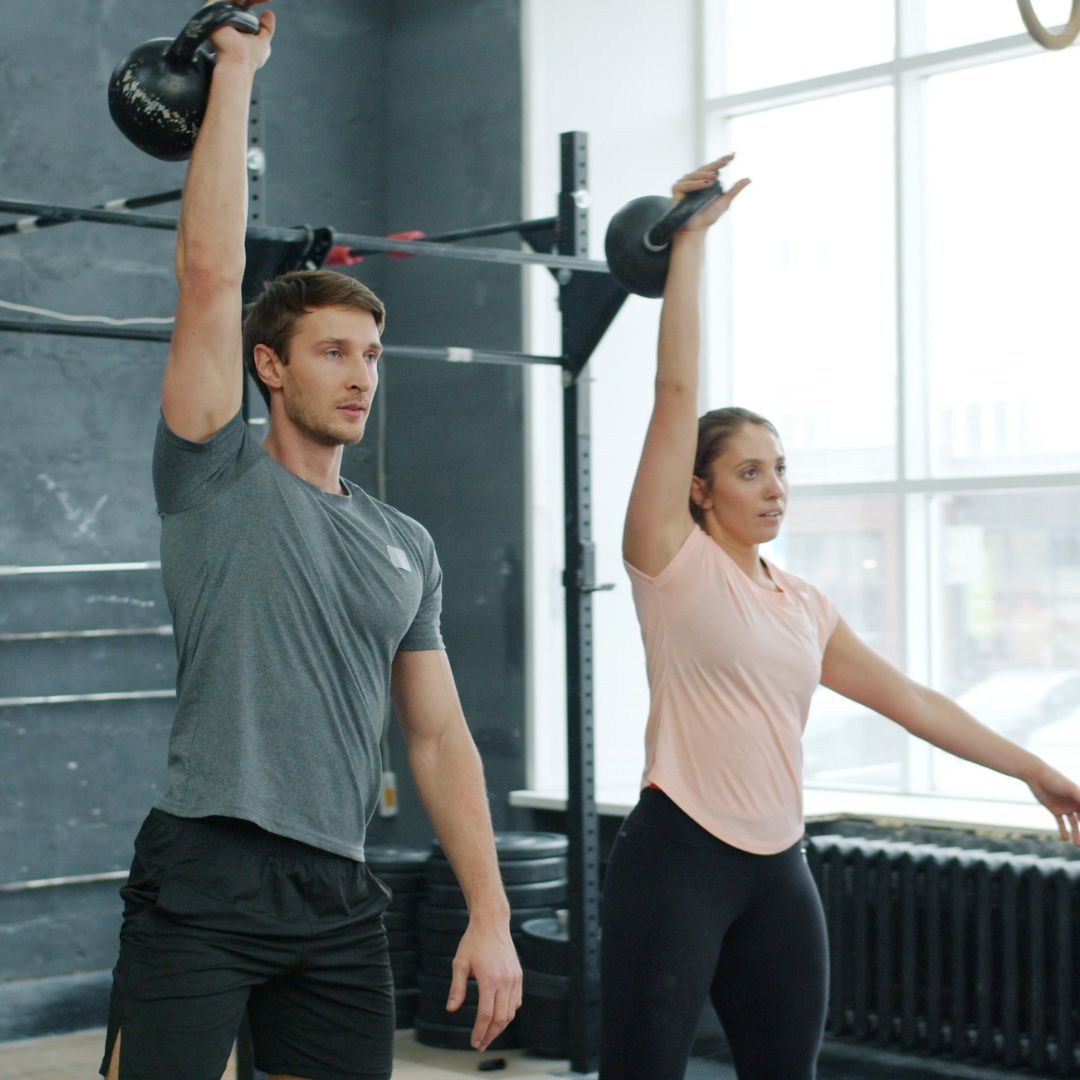
Kettlebells are one of the most effective training tools for combining strength training and cardiovascular conditioning. With just one or two kettlebells, you can build muscle, improve endurance, and burn calories without needing an entire gym.
This 8-week fat-burning kettlebell workout combines traditional strength exercises with explosive movements and high-intensity conditioning. The goal is to maximize calorie expenditure while maintaining muscle and strength as you lose body fat.
With four weekly sessions and progressive increases in difficulty, the program provides a structured approach to improving body composition and overall fitness.
Key Points You Need to Know!
|
Using the Kettlebell for Fat Loss
Kettlebells are great for fat-loss training as they’re extremely versatile.Theyallowyoutotransition quickly between strength exercises and cardiovascular conditioning,leading to an amazinghigh-calorie-burning strength workout.
Compound exercisessuch as squats, presses, and rows train multiple muscle groups, helping preserve strength and muscle mass during a calorie deficit.
Explosive movementssuch as kettlebell swings and thrusters can elevate heart rate and increase energy expenditure.
Unconventionalandmobility movementssuch as farmercarry, gobletcarry, and gorilla hopslead tohigh calorie burn and functional strength.
Core trainingsuch as kettlebell pull-throughs and kettlebell marches helps to strengthen your abs and back.
Strength sets, supersets, timed circuits, EMOMs, and HIITare various types of sets you can use to target different training variables.
This makes kettlebells ideal for workouts that combine muscular strength and cardiovascular endurance.
Just remember thatkettlebell training is only one part of a fat loss program. Other essential components include:
- A sustained calorie deficit to drive weight loss.
- Resistance strength training to preserve lean muscle and improve body composition.
- Add general physical activity to increase caloric burn.

The Best Kettlebell Exercises for Fat Burning
We’re now going to lay out the exercises you’ll be using throughout the eight-week program.
While this plan focuses on fat burning and improving body composition, it also includes traditional strength movements. Their primary purpose is to help retain muscle and strength during a calorie deficit.
The exercises are divided into two categories: strength training and conditioning.
Together, theyprovide a combination ofmuscular development, cardiovascular training, and calorie expenditure.
The 8-Week Kettlebell Workout
The programconsists offour weekly training sessionscombiningstrength-focused movements and metabolic conditioning.
Rather than relying exclusively on high-intensity circuits, the workouts incorporate:
- Dedicated strength exercises to maintain muscle and improve performance
- Supersets that provide strength training while increasing conditioning demands.
- Conditioning closers to increase cardiovascular demands and overall energy expenditure.
Note: When multiple rep counts are listed, such as 20 (10) kettlebell swings, you can choose either 20 or 10 reps based on your fitness level. If you see multiple exercises, such as manmaker (burpee), this means manmakers are the primary exercise, but you can swap for burpees.
Session 1 – Upper-Body Strength
- Kneeling Kettlebell Shoulder Press: 3 × 8–12
- Bent-Over Kettlebell Row: 3 × 8–12
Supersets (30s rest between exercises)
- Floor Press + Gorilla Rows
- Push-Ups + Renegade Row
Conditioning Circuits – 3-4 Rounds w/ 60s rest between rounds
- 10 Kettlebell Thrusters (one arm)
- 30s Kettlebell Marches
- 20 (10) Double Kettlebell Swings
- 30s Kettlebell Marches
- 10 Kettlebell Thruster (other arm)
Session 2 – Lower-Body Strength
- Kettlebell Front Squat: 4 × 8–10
- Kettlebell Romanian Deadlift: 3 × 10–12
Superset (30s rest between exercises)
- Kettlebell Sumo Deadlift + B-Stance RDL (Single Leg Hip Thrust)
- 30s Suitcase Carry (Right Arm)
- 30s Single Overhead Carry (Left Arm)
- 10 (20) Kettlebell Pull-Throughs
- 10 (15, 20) Gorilla Walks
- 10 (20) 20 Kettlebell Pull-Throughs
- 30s Single Overhead Carry (Right Arm)
- 30s Suitcase Carry (Left Arm)
Session 3 – Upper-Body Strength
- Kettlebell Single-Arm Push Press: 3 × 8–12
- Single-Arm Kettlebell Row: 3 × 10–12/side
- Offset Decline Press* + Kettlebell Crush Grip Press: 3-5 sets
- Kettlebell Pullover + Kettlebell Curl: 3-5 sets
Conditioning Circuit – 3-4 Rounds w/ 60s rest between rounds
- 20 (10) Kettlebell Swings
- 30 Seconds Kettlebell Figure-8 Passes
- 10 Kettlebell Burpees
- 30 Seconds Kettlebell Figure-8 Passes
- 20 (10) Kettlebell Swings
Session 4 – Lower-Body Strength
- Kettlebell Deadlift: 4 × 6–8
- Kettlebell Bulgarian Split Squat: 3 × 8-10/side
- Kettlebell Single Overhead Squat + Kettlebell Hip Thrust: 3-5 sets
- Kettlebell Reverse Lunge + Kettlebell Single-Leg RDL: 3–5 sets
- 30 (20, 10) Kettlebell Hand-to-Hand Swings
- 30 Seconds Around-The-World
- 10 Kettlebell Manmakers (15 burpees, 50 mountain climbers)
- 30 Seconds Around-The-World
- 30 (20, 10) Kettlebell Hand-to-Hand Swings
*Complete each round of circuits to completion. Rest as needed and track your total completion time of all rounds.
How to Progress Over 8 Weeks
You’ll follow the same four workouts throughout the eight weeks, gradually increasing the difficulty based on your performance.
Strength Exercises
Use double progression to increase resistance over time.
- Start with a weight that allows you to complete the lower end of the prescribed rep range.
- Add repetitions until you can complete every set at the upper end of the range.
- Increase the kettlebell weight and return to the lower end of the rep range.
- Repeat this process throughout the eight weeks.
For example, if you’re performing 3 × 8–12 kettlebell front squats, work toward completing all three sets of 12 before increasing the weight.
Conditioning Exercises
Progression depends on how the conditioning workout is structured.
- Fixed circuits: Complete the same number of rounds and repetitions in less time.
- Timed circuits (AMRAP): Increase the total rounds or repetitions completed within the time limit.
- Intervals: Increase repetitions during work periods while maintaining the prescribed rest.
- EMOMs: Complete the prescribed repetitions more efficiently, allowing more rest within each minute.
Once you hit the target reps or rounds relatively comfortably, increase the kettlebell weight. Now it should be hard, but if you feel your form is falling apart and you’re about to die when you finish, repeat that load.
If you can’t go heavier, add 2–3 reps per set or another round to the circuit.
Choosing the Right Kettlebell Weight
Kettlebell weight selection depends on the exercise and its purpose. You may need multiple weights to train effectively.
- Choose a weight that leaves approximately 1–2 repetitions in reserve at the end of each set.
- Use heavier kettlebells for lower-body movements such as squats and deadlifts.
- Use lighter weights for movements such as overhead presses, depending on your strength.
- Increase resistance once you can complete the upper end of the prescribed rep range.
For Conditioning Exercises
- Select a weight you can control throughout the entire circuit, including when fatigued.
- For swings, use a load that allows powerful hip extension without relying on your arms to lift the kettlebell.
- For combination movements, such as thrusters and manmakers, choose the weight based on the most demanding portion of the exercise.
- Avoid increasing resistance if it significantly reduces movement speed or causes your technique to deteriorate.
If you only have one kettlebell: Adjust repetitions, circuit duration, or rest periods to increase training difficulty when heavier weights aren’t available.

Nutrition And Activity To Maximize Fat Loss.
The kettlebell workouts will help increase calorie expenditure and maintain muscle, but your nutrition and overall activity levels will largely determine your fat-loss results.
1. Maintain a calorie deficit: Aim for approximately 300–500 calories below your daily maintenance needs.
2. Eat enough protein: Consume approximately 1.6–2.2 grams per kilogram of body weight daily to support muscle retention.
3. Increase daily activity: Add walking or low-intensity cardio on non-training days to increase weekly calorie expenditure. Aim for at least 7,000 steps daily, with 10,000 steps being optimal, especially on non-training days.
4. Don’t sacrifice strength or muscle: Avoid excessive calorie restriction or additional conditioning that interferes with your resistance training performance.
5. Track your results: Monitor weekly weight averages and waist measurements, adjusting your calorie intake or activity level if progress stalls.
And if you need help with guidance, you can now insert all of our programs into our new Set For Set AI Training App!Check it out here!
FAQ: 8-Week Fat Burning Workout
1. Are kettlebell workouts good for burning fat?
Yes. Kettlebell workouts combine resistance training with cardiovascular conditioning, helping burn calories while maintaining muscle. However, losing body fat ultimately requires a consistent calorie deficit.
2. How many calories does a kettlebell workout burn?
Calorie expenditure depends on body weight, workout intensity, exercise selection, and duration. Vigorous kettlebell circuits can burn several hundred calories per session, particularly when combining strength training and conditioning.
3. How often should you do kettlebell workouts to lose weight?
Three to four kettlebell workouts per week can be effective for weight loss when paired with appropriate nutrition. Alternating upper- and lower-body sessions allows you to train frequently while managing fatigue.
4. How heavy should my kettlebell be for fat-burning workouts?
Choose a weight that challenges you without compromising technique. Heavier kettlebells maybe appropriate forstrength exercises, while lighter weights often work better for high-repetition conditioning circuits.
5. Can you build muscle while losing fat with kettlebells?
Yes. Kettlebell resistance training can help build or preserve muscle while losing body fat, particularly for beginners. Progressive overload, sufficient protein, and an appropriate calorie deficit are important for achieving both goals.

2 Comments
Pingback: A revolutionary new microscope could reveal the hidden machinery of life - healthlifestylee.blog
Pingback: The Top 12 Reasons Why the Deadlift Is One of the Best Exercises Ever - healthlifestylee.blog