

Date:
September 20, 2026plague repeatedly returned to Europe for more than 400 years after the Black Death, evolving into new lineages and spreading through trade, migration, and war. Researchers also developed a method to date ancient plague genomes more precisely, linking many of them to specific outbreaks recorded in historical
The Black Death is best known for the catastrophic wave of plague that swept through Europe between 1347 and 1353, killing millions of people. But the disease did not vanish once that initial disaster passed. Plague returned again and again for more than four centuries, repeatedly disrupting cities, economies, and societies across Europe and surrounding regions.
A study led by researchers at the University of Tartu is now offering a much more detailed look at what happened during those centuries. By analyzing DNA from the plague bacterium preserved in archaeological human remains, scientists were able to reconstruct how the disease spread, evolved, and repeatedly reappeared long after the Black Death.
Ancient DNA Reveals Centuries of Plague
The team reconstructed 26 genomes of Yersinia pestis,
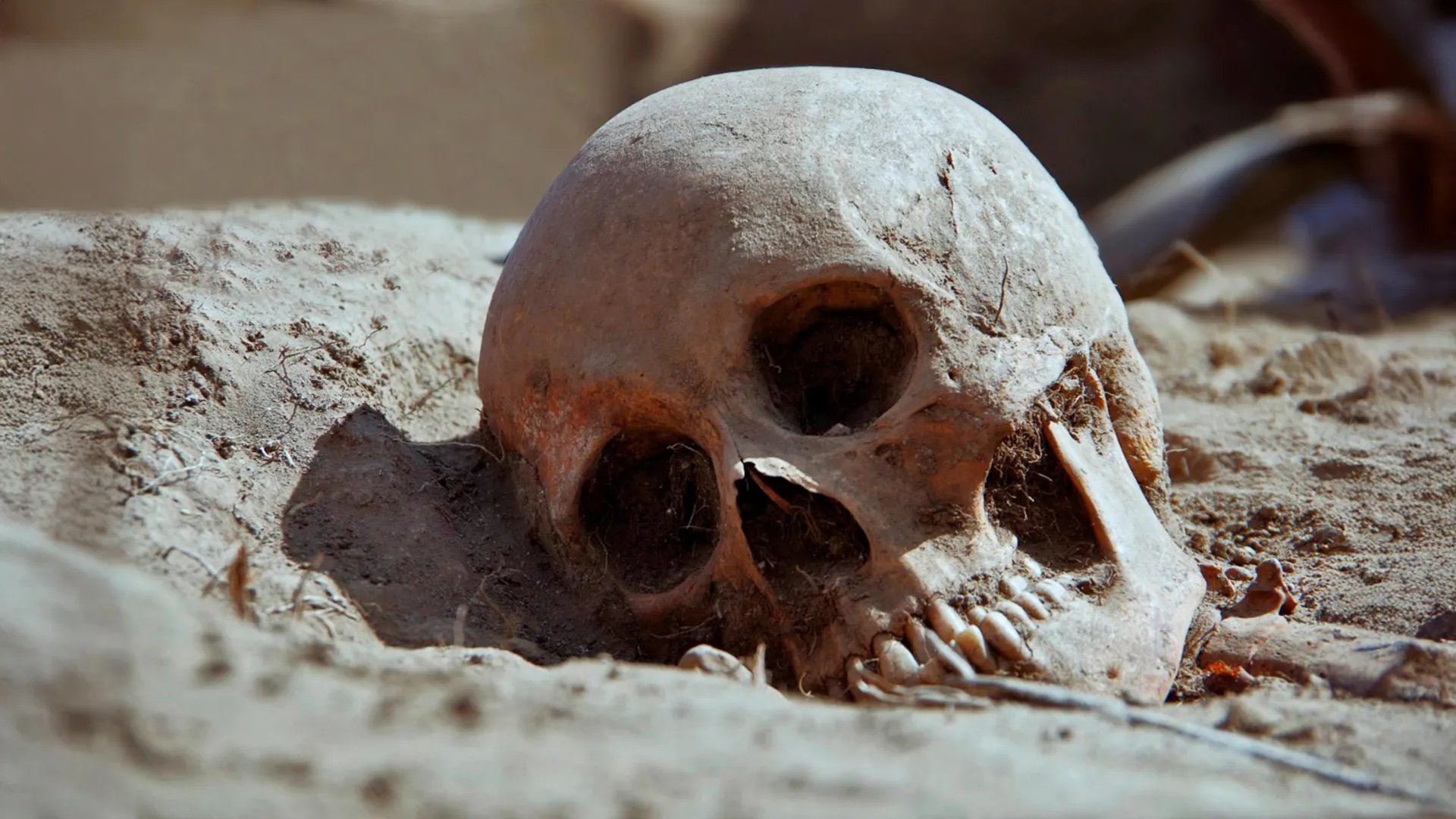
The team reconstructed 26 genomes of Yersinia pestis, the bacterium that causes plague, from human remains recovered at 11 archaeological sites in Estonia, Russia, England, the Netherlands, and Switzerland. The samples date from the fourteenth through the eighteenth centuries, covering a large portion of the period known as the Second Plague Pandemic.
The genetic evidence suggests that plague did not simply survive in one place and repeatedly spread outward from a singlent parts of Europe over hundreds of years, potentially creating several new reservoirs where the bacterium could persist
Estonia was repeatedly affected. Researchers found signs that plague entered the region multiple times during much of the Second Plague Pandemic, indicating that Estonia’s connections with other parts of Europe also helped disease move across long distances.
One of the most striking patterns appeared around
One of the most striking patterns appeared around 1450-1500. During that period, plague lineages underwent a major expansion and split into three important branches. Those branches may have helped establish new reservoirs of Yersinia pestis in wild rodent populations.
Climate may also have influenced this expansion. The researchers point to the Great Renaissance Drought as one possible factor. Studies of modern plague systems have shown that changes in climate can strongly affect outbreaks among wild rodents, which act as natural hosts for the bacterium.
“We found evidence for repeated introductions of plague into Estonia starting already in the late 14th century and identified several previously unknown genetic lineages, both in urban and rural settings,” said senior author Prof. Kristiina Tambets.
Pinpointing Ancient Plague Outbreaks
A major challenge in studying historical pandemics
A major challenge in studying historical pandemics is figuring out exactly when ancient infections occurred.
During the COVID-19 pandemic, researchers could follow individual variants in remarkable detail because genome sequences were usually linked to precise dates. Ancient disease samples rarely come with that kind of information. Archaeological remains are often dated using radiocarbon techniques that can produce time windows spanning many decades or even more than a century.
“With COVID-19, scientists could reconstruct the spread of individual strains extremely well because the genomes came with precise timestamps. For historical pandemics, those timestamps are often missing or may cover more than 100 years, which limits our ability to interpret the genetic data,” the main author, Dr. Marcel Keller, explained.
To address that problem, the team developed
To address that problem, the team developed a method designed to narrow those broad dating ranges. Researchers examined where individual plague genomes appeared on the bacterium’s evolutionary tree and used that information to refine the likely dates of many samples.
This allowed them to place ancient infections into a much more precise historical timeline.
The researchers then applied the improved dating approach to 64 previously published plague genomes and 11 newly sequenced genomes. Their work represents the first systematic attempt to connect nearly all plague genomes currently available from the fourteenth to eighteenth centuries with outbreaks described in historical records.
“We were able to improve dating intervals for many samples, which allowed us to connect them to specific plague waves and outbreaks that were recorded in the respective towns or regions by chroniclers,” said historian and corresponding author Prof. Philip Slavin.
War Helped Plague Move Across Europe
The genetic record also shows how strongly human activity influenced the spread of plague.
Newly analyzed genomes provide additional evidence linking outbreaks
Newly analyzed genomes provide additional evidence linking outbreaks to the Thirty Years’ War (1618-1648) and the Great Northern War (c. 1700-1721). Armies, displaced civilians, refugees, and traders frequently traveled along the same routes, creating opportunities for disease to move between regions.
“We see how Yersinia pestis splits into new branches during periods of conflict and spreads along the routes traveled by troops and displaced populations,” said senior author Dr. Christiana L. Scheib.
The findings add new detail to plague outbreaks connected with the Great Northern War. During the 1710 siege of Tallinn, for example, the disease killed Swedish and Russian soldiers as well as civilians.
Taken together, the evidence shows that plague
Taken together, the evidence shows that plague was far more than a single medieval catastrophe. It remained a recurring danger for generations, repeatedly returning to communities across Europe.
Why Plague History Still Matters
Plague is no longer a major public health threat in Europe, but Yersinia pestis has not vanished from the world. The bacterium still persists in natural rodent reservoirs in several regions.
Researchers say that understanding how plague became established after the Black Death, remained present for centuries, and eventually disappeared from Europe could help scientists better understand the long term behavior of infectious diseases.
Connecting ancient genomes with recorded outbreaks and possible
Connecting ancient genomes with recorded outbreaks and possible animal reservoirs can reveal how diseases emerge, spread, establish themselves, and persist over long periods. That information could also improve modern disease surveillance and efforts to monitor places where plague still circulates today.
Reconstructing the Second Plague Pandemic
The project brought together researchers and evidence from several countries and scientific fields. Samples and expertise came from collaborators across Europe, including scientists at the University of Cambridge and research partners in the Netherlands and Switzerland.
The findings reveal a disease that repeatedly crossed borders, evolved into new lineages, followed human movement, and continued shaping Europe for centuries after the Black Death itself had ended.
Materials provided by Estonian Research Council
Materials provided by Estonian Research Council. Note: Content may be edited for style and length.
- Marcel Keller, Meriam Guellil, Philip Slavin, Lehti Saag, Kadri Irdt, Helja Kabral, Anu Solnik, Martin Malve, Heiki Valk, Aivar Kriiska, Craig Cessford, Sarah A. Inskip, John E. Robb, Christine Cooper, Conradin von Planta, Mathias Seifert, Thomas Reitmaier, Willem A. Baetsen, Don Walker, Sandra Lösch, Sönke Szidat, Mait Metspalu, Toomas Kivisild, Kristiina Tambets, Christiana L. Scheib. A refined phylochronology of the second plague pandemic in Western Eurasia. Proceedings of the National Academy of Sciences, 2026; 123 (37) DOI: 10.1073/pnas.2534899123
Estonian Research Council. “Ancient DNA reveals how plague kept returning for 400 years after the Black Death.” ScienceDaily. ScienceDaily, 20 September 2026. <www.sciencedaily.com/releases/2026/09/260919031025.htm>.
Estonian Research Council. (2026, September 20). Ancient DNA reveals how plague kept returning for 400 years after the Black Death. ScienceDaily. Retrieved September 20, 2026 from www.sciencedaily.com/releases/2026/09/260919031025.htm
Estonian Research Council. “Ancient DNA reveals how plague kept returning for 400 years after the Black Death.” ScienceDaily. www.sciencedaily.com/releases/2026/09/260919031025.htm (accessed September 20, 2026).
RELATED STORIES
