

Date:
November 20, 2026
Source:
Columbia University
Summary:
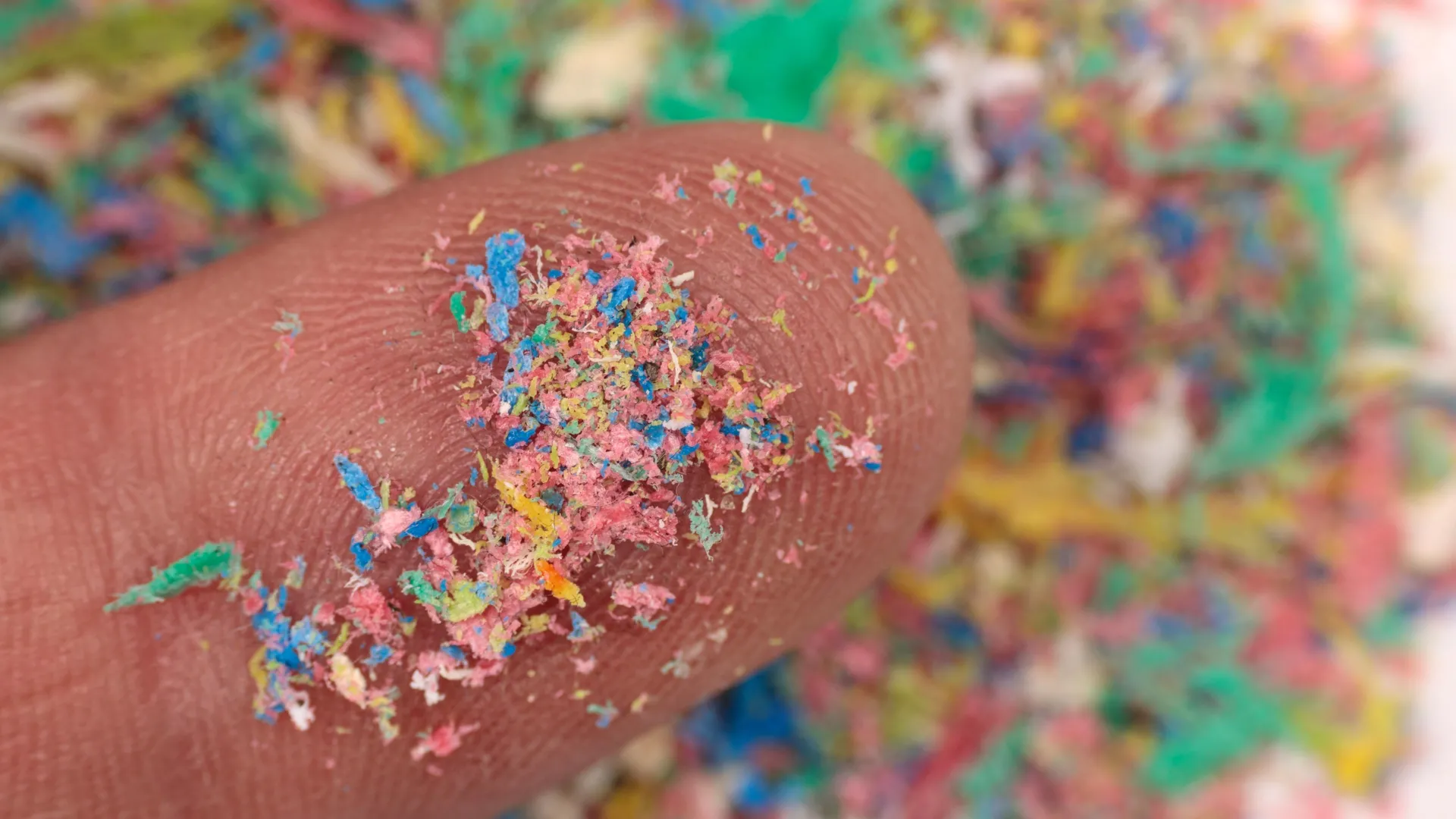
Microplastics may be doing something far more dangerous than simply accumulating in our bodies. Scientists have discovered that tiny plastic particles can interact with water to generate highly reactive molecules capable of damaging cells and tissues. This unexpected chemical activity could help explain growing evidence linking microplastic exposure to serious health problems, including heart attacks, strokes, and neurological disorders.
Share:
FULL STORY
Plastic is used in everything from food packaging and water bottles to children’s toys, largely because it is considered chemically stable and unlikely to react with its surroundings. However, new research suggests that this assumption may not hold when plastic breaks down into extremely small particles.
As larger plastic objects fragment into microplastics and even smaller nanoplastics, the amount of exposed surface area increases dramatically. Scientists have now discovered that these newly exposed surfaces can interact with water in unexpected ways, producing reactive molecules that may harm living cells.
Researchers at Columbia University and the University
Researchers at Columbia University and the University of California, Berkeley identified the chemical processes behind this phenomenon in a new study published in Nature. Their findings challenge the longstanding idea that microplastics are simply passive fragments of material.
“As plastic fragments into smaller and smaller particles, its surface area increases enormously. Then microplastics change the water that surrounds them, generating high-energy, reactive radicals (reactive oxygen species, ROS) that very likely contribute to biological damage that we see in animals and potentially in humans as a result of microplastic exposure,” said Wei Min, a Columbia professor of Chemistry and Biomedical Engineering.
Why Microplastics Could Be Dangerous Inside the Human Body
The discovery raises important questions about what happens when microplastics enter the human body. Blood and cells contain large amounts of water, creating conditions in which these tiny particles could continue participating in chemical reactions.
Rather than remaining inactive after exposure, microplastics may
Rather than remaining inactive after exposure, microplastics may generate reactive oxygen species, often called ROS. These highly reactive molecules can damage biological structures, including components of cells and tissues. The findings offer a possible explanation for some of the harmful effects associated with microplastic exposure, although they do not establish that this process causes specific diseases in humans.
The research builds on earlier work by Min’s laboratory that helped reveal just how widespread microscopic plastic contamination has become.
In a widely reported 2024 study, the Columbia researchers developed a laser-based microscopy technique capable of detecting extremely small plastic particles. Using this technology, they found an average of approximately 240,000 detectable plastic fragments in a single liter of bottled water (mostly nanometer-sized plastic, nanoplastics). That was 10 to 100 times more particles than previous estimates had suggested.
The discovery helped draw greater attention
The discovery helped draw greater attention to the presence of microplastics and nanoplastics throughout the food system.
Growing Concerns About Microplastics and Human Health
Since that earlier research attracted widespread attention, the potential health consequences of microplastic exposure have become an increasingly important public health issue.
In 2026, the federal government launched a $144 million initiative focused on addressing toxic microplastics in the human body. The U.S. Environmental Protection Agency also added microplastics to a federal list of contaminants that may be of concern in drinking water, marking their first appearance on the list.
Studies published in major scientific journals, including
Meanwhile, studies published in major scientific journals, including the New England Journal of Medicine, Nature Medicine, and Nature Health, have reported associations between exposure to microplastics and nanoplastics and serious conditions such as heart attacks, strokes, dementia, and brain tumors.
However, an important question has remained unanswered. If plastic is generally considered chemically inert, how might these microscopic fragments contribute to biological damage?
The new findings identify a previously overlooked chemical pathway that could help researchers understand these potential health risks.
Our research found that when microplastics interact
“Our research found that when microplastics interact with water, as they do when they’re in bottled water, or when they’re absorbed into our bloodstream, they spontaneously generate what we call reactive oxygen species (ROS),” said Naixin Qian, a postdoctoral researcher in Wei Min’s lab who helped lead the research. “ROS are textbook examples of the kinds of molecules that can damage animal and human tissue.”
How Water Triggers Harmful Chemical Reactions
One of the most surprising aspects of the discovery is that water plays an active role in the reaction.
Many plastics are hydrophobic, meaning their surfaces repel water. When water encounters these surfaces, the molecules and electrically charged particles near the boundary can behave differently than they do in ordinary water.
The researchers found that these interactions can encourage
The researchers found that these interactions can encourage electrons to move between chemical species, allowing highly reactive radicals to form. As plastic fragments become smaller, their greater surface area provides more locations where these reactions can occur.
“Water is a key active player here, rather than just a spectator. It’s integral to making these microplastics reactive. Water molecules become chemically active when they come into contact with plastic, which is hydrophobic. Contact between the water and plastic creates an environment that facilitates electron transfer, and the formation of reactive radicals. When plastics fragment into smaller particles, their increasing surface-to-volume ratio creates more of these chemically active areas,” Min said.
To investigate the process, the Columbia researchers performed chemical and biological experiments. Their collaborators in Professor Teresa Head-Gordon’s laboratory at UC Berkeley used theoretical calculations and computer simulations to examine the interactions between plastic surfaces and water at the molecular level.
The Berkeley team developed a theoretical explanation showing
The Berkeley team developed a theoretical explanation showing how hydroxide ions, which are negatively charged particles, can become concentrated in the layers of water immediately surrounding a water-repelling plastic surface. In this environment, the ions can more readily lose electrons and form hydroxyl radicals.
Hydroxyl radicals are particularly reactive chemical species capable of damaging biological molecules. Their formation provides a possible link between the physical breakdown of plastics and the biological effects researchers have observed.
Could the Discovery Lead to Safer Plastics?
Understanding the chemistry involved could eventually help scientists develop plastics that are less likely to generate harmful reactive molecules when exposed to water.
Our fundamental work that the most hydrophobic microplastics
“Our fundamental work that the most hydrophobic microplastics interacting with water can drive chemical reactivity could ultimately lead to new engineering solutions by redesigning the chemistry of these commodity plastics to reduce the toxic outcomes on health and the environment,” said Head-Gordon.
The implications also extend beyond human health. Microplastics can enter rivers, lakes, and other waterways through industrial waste, wastewater, and everyday activities. The newly identified chemical reactions could influence aquatic organisms and ecosystems exposed to these particles.
Co-author Beizhan Yan of Columbia University’s Lamont-Doherty Earth Observatory emphasized that microplastics can originate from numerouss. Everyday processes, such as heating materials in a microwave or leaving bottled water exposed to sunlight during storage, can also contribute to the formation of tiny plastic particles
This work has significant implications for environmental
“This work has significant implications for environmental and human health,” said co-author Beizhan Yan of Lamont-Doherty Earth Observatory. “In certain environments, such as discharges from plastic manufacturers and laundromats, microplastics can form and enter aquatic environments. This work also indicates that radicals can form on hydrophobic plastic surfaces in water, which could affect ecosystems and human health following exposure. In addition, various uses and processes in our daily lives can generate microplastics, including microwave heating, sunlight exposure of bottled water during storage. This foundational work provides a potential pathway for understanding their health impacts.”
Materials provided by Columbia University. Note: Content may be edited for style and length.
- Naixin Qian, Ruoqi Zhao, Kwing Yeung Chan, Vinh Gia Vuong, Xin Gao, Zhilun Zhao, R. Allen LaCour, Yifan Dai, Phoebe A. Stapleton, Beizhan Yan, Teresa Head-Gordon, Wei Min. Intrinsic physicochemical activity at microplastic–water interfaces. Nature, 2026; 658 (8136): 650 DOI: 10.1038/s41586-026-11141-y
Columbia University. “Microplastics may be more dangerous than we thought. Scientists just discovered why.” ScienceDaily. ScienceDaily, 20 November 2026. <www.sciencedaily.com/releases/2026/11/261120075549.htm>.
Columbia University. (2026, November 20). Microplastics may be more dangerous than we thought. Scientists just discovered why. ScienceDaily. Retrieved November 21, 2026 from www.sciencedaily.com/releases/2026/11/261120075549.htm
Columbia University. “Microplastics may be more dangerous than we thought. Scientists just discovered why.” ScienceDaily. www.sciencedaily.com/releases/2026/11/261120075549.htm (accessed November 21, 2026).
RELATED STORIES
