

Date:
November 15, 2026s discovered that carefully timed bursts of gentle pink noise during sleep can strengthen the brain’s natural cleaning waves, which help flush away potentially harmful waste. The breakthrough could pave the way for new treatments aimed at improving sleep and memory while potentially reducing the buildup of proteins linked to Alzheimer’s disease.
Share:
FULL STORY
While we go about our daily activities, the brain gradually accumulates waste, including lactic acid and proteins that are no longer useful. Sleep provides an important opportunity to clear away these substances. As we rest, waves of cerebrospinal fluid (CSF) move through the brain, helping remove waste and maintain healthy brain function.
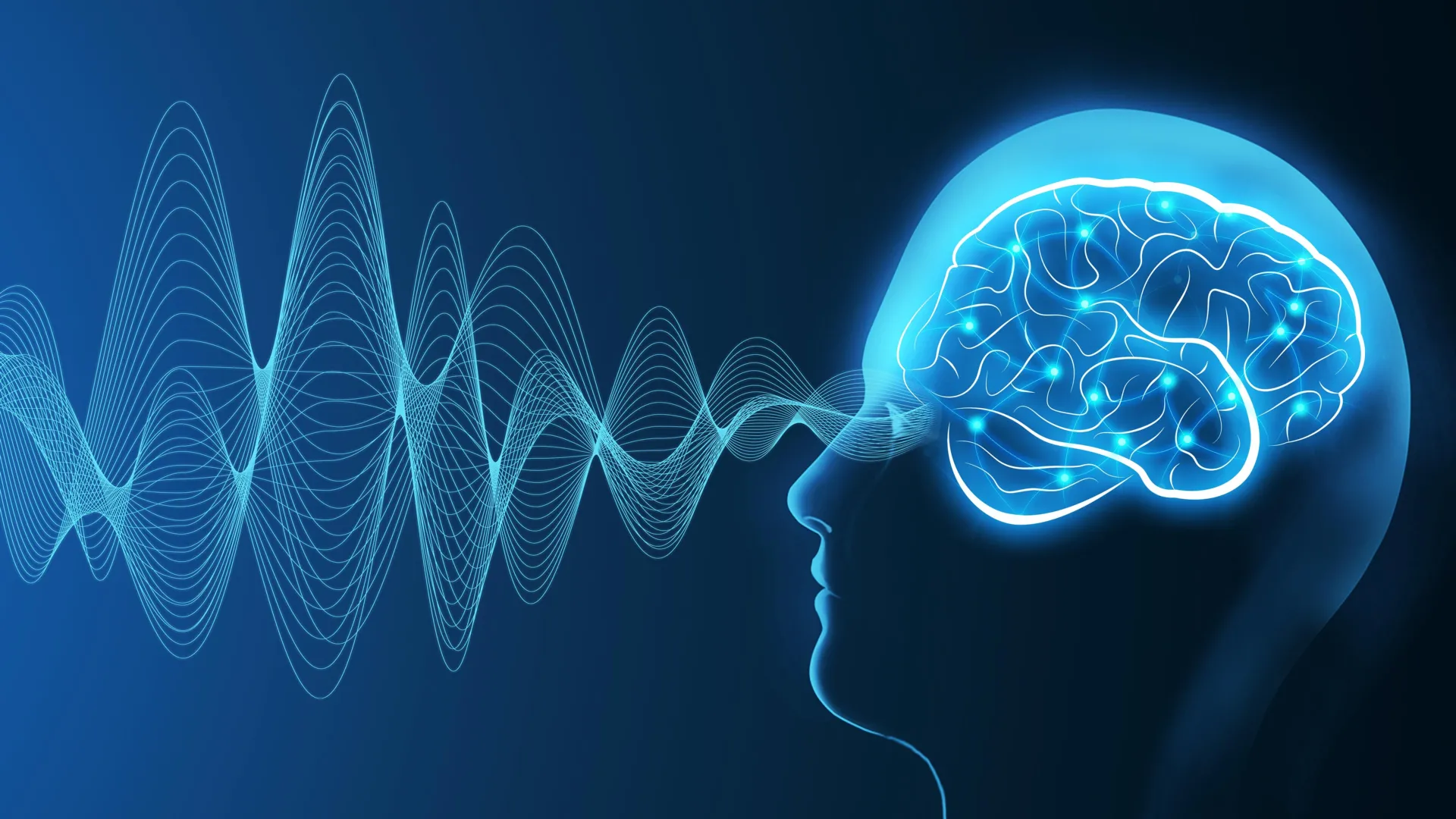
Researchers at MIT have now discovered a way to make these fluid waves stronger using brief pulses of a gentle sound called “pink noise.” When delivered at carefully chosen moments during sleep, the sounds amplify slow electrical waves in the brain. Those stronger electrical signals, in turn, produce larger waves of CSF.
The finding opens up intriguing possibilities for improving
The finding opens up intriguing possibilities for improving brain health. Scientists want to determine whether increasing this fluid movement could sharpen thinking, strengthen memory, or slow neurodegenerative diseases associated with the accumulation of damaging proteins, including amyloid beta.
“We found that we were able to increase the size of the CSF flow wave during sleep, which as far as we know, there hasn’t been a method to do before. Now that we can enhance CSF flow during sleep in healthy adults, we’re really excited to bring this technology to clinical populations to see what effects we can have,” says Laura Lewis, the Athinoula A. Martinos Associate Professor of Electrical Engineering and Computer Science, a member of MIT’s Institute for Medical Engineering and Science and the Research Laboratory of Electronics, and an associate member of the Picower Institute for Learning and Memory.
Lewis led the research as senior author. The findings were published in Science Translational Medicine, with Joshua Levitt serving as lead author. Levitt recently completed his PhD at Boston University and previously worked as a visiting graduate student in Lewis’ laboratory.
How Sleep Helps the Brain Remove Waste
Cerebrospinal fluid is a transparent liquid that surrounds
Cerebrospinal fluid is a transparent liquid that surrounds the brain and spinal cord, providing protection against physical injury. It also supports brain function by transporting nutrients, including glucose, and carrying away waste released by brain cells as they consume energy.
In 2019, Lewis demonstrated that functional magnetic resonance imaging (fMRI) could be used to observe the movement of CSF into and out of the brain during sleep. Her team found that this movement closely follows slow electrical brain waves, which are especially prominent during deep sleep.
Building on that discovery, the researchers wanted to understand whether deliberately strengthening these electrical waves would also increase the movement of CSF. Earlier experiments had shown that sounds presented at precisely the right moment could enhance slow brain waves.
You can make more of these electrical slow
“You can make more of these electrical slow waves through an auditory stimulus, if it comes at just the right time. Similar to a child on a swing, if you push them when they’re at the right moment in their movement, you can make that swing go farther,” Lewis says. “The challenge is: How do you find just the right time?”
How Pink Noise Amplifies Brain Waves
To test the idea, the team used extremely short bursts of pink noise, each lasting just 50 milliseconds. Pink noise contains the full range of frequencies that humans can hear, much like white noise. However, its lower frequencies are more prominent, while higher frequencies are quieter. The result is a softer, more balanced sound reminiscent of steady rainfall or a waterfall heard from a distance.
Timing was essential. The researchers needed to deliver each burst of sound when a sleeping participant’s slow brain waves reached their peak. To identify those moments, they monitored electrical activity using EEG while simultaneously measuring CSF movement with fMRI.
Combining the two measurements created a technical obstacle
Combining the two measurements created a technical obstacle. The powerful magnetic fields used in fMRI interfere with EEG recordings, making it difficult to detect the brain’s electrical signals accurately and quickly enough to synchronize the sound.
The team addressed this problem by creating a method that removes interference from EEG signals in less than 100 milliseconds. They also designed an algorithm capable of predicting when the next slow wave peak would occur, compensating for the small delay introduced by processing the signals. Together, these advances made it possible to play each burst of pink noise at the intended moment.
Stronger Brain Cleaning Waves During Sleep
The researchers tested their approach in 14 healthy volunteers. They found that the carefully timed sounds increased the size of both the brain’s slow electrical waves and the accompanying CSF waves. Importantly, the sounds were quiet enough that they did not wake the participants.
The brain scans also helped explain how
The brain scans also helped explain how the process works. Slow electrical waves were associated with blood vessels narrowing and widening, creating a pumping effect that pushes CSF out of the brain. These slow waves occur during non-REM sleep and become increasingly pronounced as sleep deepens.
Could Pink Noise Improve Sleep and Help Fight Alzheimer’s?
The researchers now want to investigate whether increasing CSF flow leads to more refreshing, restorative sleep, particularly for people who struggle with insomnia. Another major goal is to determine whether the technique can improve the brain’s ability to clear harmful substances.
This possibility is especially relevant to Alzheimer’s disease and other forms of dementia, which are associated with the accumulation of abnormal proteins in the brain. If stronger CSF movement ultimately translates into more effective waste removal, the approach could offer a new way to address one of the biological processes involved in these conditions.
Brain waste clearance is really important for Alzheimer’s
“Brain waste clearance is really important for Alzheimer’s and other forms of dementia, which are caused, in part, by the buildup of molecules like amyloid and tau in the brain. If we can improve brain waste clearance, we may be able to help prevent the buildups of these plaques that lead to disease,” Levitt says.
The technology could eventually become accessible outside research laboratories. Levitt has launched a company that aims to develop a home device, potentially in the form of a headband, that would deliver sound at the appropriate moments during sleep to increase CSF flow.
For now, the results demonstrate that a simple auditory stimulus, when precisely synchronized with brain activity, can alter the fluid waves associated with the brain’s nighttime cleaning process. Whether those changes can translate into better sleep, stronger memory, or protection against neurodegenerative disease remains an important question for future studies.
The research received funding from a McKnight Scholar
The research received funding from a McKnight Scholar Award, a Sloan Fellowship, a Pew Biomedical Scholars Award, the Simons Foundation Collaboration on Plasticity in the Aging Brain, the MIT EECS Transformative Research Fund, the National Institutes of Health, the Corundum Convergence Institute, and the Panasonic Well Fellowship for AI and Wellness.
Materials provided by Massachusetts Institute of Technology. Original Note: Content may be edited for style and length
- Joshua Levitt, Xiangjian Zeng, Zinong Yang, Leandro P. L. Jacob, Laura D. Lewis. Closed-loop auditory stimulation in phase with slow waves during sleep enhances cerebrospinal fluid flow in humans. Science Translational Medicine, 2026; 18 (866) DOI: 10.1126/scitranslmed.aea5469
Massachusetts Institute of Technology. “MIT scientists discover a surprising way to boost the brain’s nighttime cleaning system.” ScienceDaily. ScienceDaily, 15 November 2026. <www.sciencedaily.com/releases/2026/11/261115085533.htm>.
Massachusetts Institute of Technology. (2026, November 15). MIT scientists discover a surprising way to boost the brain’s nighttime cleaning system. ScienceDaily. Retrieved November 16, 2026 from www.sciencedaily.com/releases/2026/11/261115085533.htm
Massachusetts Institute of Technology. “MIT scientists discover a surprising way to boost the brain’s nighttime cleaning system.” ScienceDaily. www.sciencedaily.com/releases/2026/11/261115085533.htm (accessed November 16, 2026).
RELATED STORIES
