

Date:
September 19, 2026e genetic cause behind the mysterious AnWj blood group antigen, solving a puzzle that began in 1972 and establishing a new blood group system called MAL. The discovery could make it much easier to find extremely rare AnWj-negative patients and donors and protect them from potentially dangerous transfusion reactions.
Share:
FULL STORY
More than half a century after scientists first encountered a mysterious marker on human red blood cells, researchers finally traced it to its geneticstem and gave doctors a new way to identify the exceptionally rare people whose blood lacks the AnWj antigen
The work was led by scientists at NHS Blood and Transplant in Bristol, including researchers from the International Blood Group Reference Laboratory (IBGRL), together with colleagues at the University of Bristol. Their findings solved a puzzle dating back to 1972 and could help prevent dangerous transfusion reactions in a small number of patients.
Although most people are familiar with the ABO
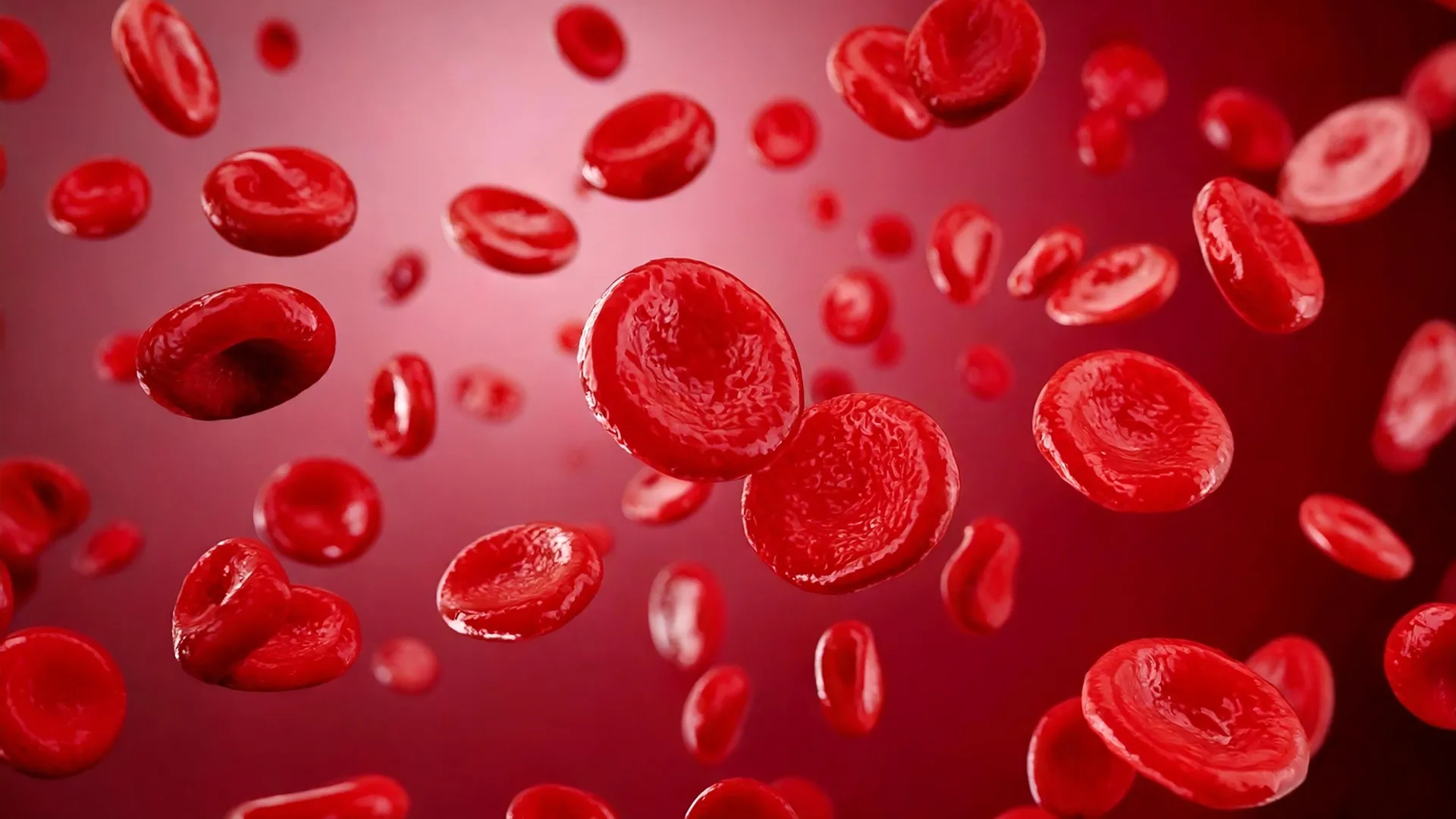
Although most people are familiar with the ABO and Rh blood groups, those are only part of a much larger biological system. Red blood cells carry hundreds of different molecules on their surfaces. Many of these molecules act as antigens, markers that the immune system can recognize.
For most transfusions, ABO and Rh compatibility receive the most attention. But in patients with unusual antibodies or rare blood types, matching some of these lesser-known antigens can become crucial.
A Blood Marker Found in More Than 99.9% of People
The AnWj antigen was discovered in 1972, but for decades scientists did not know which gene produced it or which protein carried it on red blood cells.[1]
More than 99.9% of people are AnWj positive
More than 99.9% of people are AnWj positive. For the tiny minority who are AnWj negative, however, the distinction can matter enormously.
If an AnWj negative person develops antibodies against AnWj and then receives AnWj positive blood, those antibodies can attack the transfused red blood cells. In some circumstances, that can trigger a potentially serious transfusion reaction.
There are also two very different reasons someone can lack the antigen. In most cases, AnWj expression appears to be suppressed because of an underlying hematological disorder or certain cancers.[2] Much more rarely, a person is born without the antigen because of an inherited genetic change.
Only a handful of people with this inherited
Only a handful of people with this inherited form had ever been identified, making the mystery especially difficult to investigate.
The Genetic Clue Was Hidden in MAL
To find thehnique examines the portions of DNA that contain instructions for making proteins, allowing scientists to search across thousands of genes for unusual variants shared by affected individuals
The analysis pointed unexpectedly to the MAL gene.
The researchers found that people with the inherited AnWj negative phenotype carried homozygous deletions affecting MAL. Homozygous means that the relevant change was present in both copies of the gene, one inherited from each parent.
The MAL gene produces a small membrane protein
The MAL gene produces a small membrane protein called Mal. When the team examined red blood cells, people who were AnWj positive produced the full-length Mal protein on their cells, while it was missing from AnWj negative cells.
Five genetically AnWj negative individuals were included in the investigation, including members of an Arab Israeli family.[3] The samples also included blood donated in 2015 by the woman who had been the first AnWj negative person identified in the 1970s.
The researchers did not stop at finding a genetic association. They needed to demonstrate that Mal really was responsible for the antigen.
When scientists introduced the normal MAL gene into
When scientists introduced the normal MAL gene into laboratory cells, the cells became reactive with AnWj antibodies. Introducing the altered form did not produce the same response. Additional experiments showed that Mal was both necessary and sufficient for expression of the AnWj antigen.
MAL Becomes an Official Blood Group System
Those results provided the evidence needed to establish MAL as a distinct blood group system, with AnWj as its defining antigen.
The International Society of Blood Transfusion later formally reported MAL as ISBT 047. MAL was one of four blood group systems ratified during the period covered by the organization’s 2026 terminology report, alongside ER, CD36 and ATP11C.
That designation is more significant than simply adding
That designation is more significant than simply adding another name to a list. For something to qualify as a blood group system, researchers must connect an antigen to a defined genetic and molecular basis.
MAL was the 47th officially recognized blood group system at the time. The field has continued to move quickly since then. In September 2026, the International Society of Blood Transfusion announced JAMA as the 49th blood group system, illustrating how the genetic map of human blood is still being expanded.
Why the Discovery Matters for Transfusions
Knowing the gene behind AnWj gives blood specialists something they did not previously have: a direct genetic way to search for people who inherit AnWj-negative blood.
Genotyping tests can now be designed to identify
Genotyping tests can now be designed to identify rare patients and donors carrying the relevant MAL changes. These tests can potentially be incorporated into existing blood group genotyping systems.
That matters because finding compatible blood for someone with an antibody against a marker present in more than 99.9% of people can be extraordinarily difficult.
The need is not merely theoretical. Earlier clinical reports have shown that anti-AnWj antibodies can cause hemolytic transfusion reactions, in which transfused red blood cells are destroyed by the recipient’s immune system.
More recent cases have underscored just how complicated the situation can become.
In 2026, researchers reported a 75-year-old man
In 2026, researchers reported a 75-year-old man with severe anemia and an anti-AnWj autoantibody. Compatible blood was unavailable, so physicians ultimately transfused unmatched red blood cells after weighing the risks. Genetic testing showed that his MAL gene was normal, supporting the conclusion that his antibody was acquired rather than caused by the rare inherited MAL deficiency. He did not experience a hemolytic transfusion reaction in that case.
Another 2026 case involved a patient with high-grade B-cell lymphoma and a complement-binding anti-ANWj autoantibody. After incompatible transfusions were followed by signs of red blood cell destruction, clinicians used sutimlimab, a drug that blocks part of the immune complement pathway. The patient’s laboratory measurements improved, although the researchers stressed that the complicated case and short treatment period prevent firm conclusions about the treatment’s effectiveness. It was reported as the first use of sutimlimab for this particular type of anti-AnWj-associated hemolysis.
Together, these cases highlight an important distinction. Some people are AnWj negative because of inherited MAL changes, while others can lose AnWj expression because of disease and develop an antibody against a marker their cells previously carried.
A Mystery That Took Decades to Crack
Louise Tilley, Senior Research Scientist, IBGRL Red Cell
Louise Tilley, Senior Research Scientist, IBGRL Red Cell Reference at NHS Blood and Transplant, said: “The genetic background of AnWj has been a mystery for more than 50 years, and one which I personally have been trying to resolve for almost 20 years of my career. It represents a huge achievement, and the culmination of a long team effort, to finally establish this new blood group system and be able to offer the best care to rare, but important, patients.
“The work was difficult because the genetic cases are very rare. We would not have achieved this without exome sequencing, as the gene we identified wasn’t an obvious candidate and little is known about Mal protein in red cells. Proving our findings was challenging, and we appreciate the help of all our collaborators, and the patients, without whom we would not have got to this point.”
One reason the mystery endured for so long was simply the rarity of inherited AnWj negative blood. With so few known cases, researchers had very little genetic material from affected people to compare.
The Mal protein itself also offered few obvious
The Mal protein itself also offered few obvious clues. It is a very small protein embedded in cell membranes and has been associated with processes involving membrane organization and cellular transport. Nothing immediately pointed to it as the carrier of a long mysterious red blood cell antigen.
Gene Editing Helped Confirm the Answer
Ash Toye, Professor of Cell Biology in the School of Biochemistry and Director of the NIHR Blood and Transplant Research Unit in red cell products at the University of Bristol, said: “It’s really exciting we were able use our ability to manipulate gene expression in the developing blood cells to help confirm the identity of the AnWj blood group, which has been an outstanding puzzle for half a century. This development will help identify these rare donors and help patients in the future.”
Manipulating gene expression allowed the researchers to test cause and effect rather than simply observe that a genetic variant happened to occur in AnWj negative people. By changing which genes cells expressed and then testing whether AnWj appeared, the scientists could build a much stronger case that MAL was the missing piece.
Nicole Thornton, Head of IBGRL Red Cell Reference
Nicole Thornton, Head of IBGRL Red Cell Reference at NHS Blood and Transplant, said: “Resolving the genetic basis for AnWj has been one of our most challenging projects.
“There is so much work that goes into proving that a gene does actually encode a blood group antigen, but it is what we are passionate about, making these discoveries for the benefit of rare patients around the world.
“Now genotyping tests can be designed to identify genetically AnWj-negative patients and donors. Such tests can be added to the existing genotyping platforms.”
The official ISBT blood group database now lists
The official ISBT blood group database now lists the reference MAL allele along with the null allele associated with the AnWj negative phenotype, turning what was once an unexplained serological curiosity into a genetically defined blood group system.
Human Blood Is Far More Complicated Than ABO
The MAL story also illustrates how much complexity is hidden behind the familiar letters A, B, AB and O.
Blood groups are defined by inherited differences in molecules on red blood cells. These differences often have little noticeable effect in everyday life. They become important when the immune system encounters red blood cells carrying an antigen it recognizes as foreign, particularly during transfusion or pregnancy.
That is why rare blood group research can
That is why rare blood group research can have an outsized clinical impact despite involving very few people. If a patient has an antibody against an antigen carried by nearly everyone else, locating compatible donor blood can require specialized laboratories, rare donor registries and sometimes international cooperation.
Dr. Tim Satchwell, Senior Lecturer at UWE Bristol, who contributed to the study whilst a Research Fellow at the University of Bristol, said: “Mal is a very small protein with some interesting properties which made it difficult to identify and meant we needed to pursue multiple lines of investigation to accumulate the proof we needed to establish this blood group system. Being able to combine our expertise to finally achieve this has brought the whole team a lot of satisfaction.”
For more than 50 years, AnWj was a blood antigen without a known genetic home. The identification of MAL changed that, giving researchers a molecular explanation, clinicians a path toward better genetic testing, and rare patients a better chance of being identified before a difficult transfusion becomes an emergency.
- Blood groups are complex. The two best known blood group systems are ABO and Rh. Within each blood group, red cells can carry surface markers called antigens. For example, within the ABO blood group system, there are the A and B antigens – people with A have the A antigen, people with B have the B antigen, people with AB blood have both and people with O have neither. There are now 47 recognized blood group systems together containing more than 360 recognized blood antigens.
- AnWj is named after the first people who made the antibody (Anton and Wj).
- The disorders suppress Mal and make patients AnWj-negative, unless they have the rare inherited form (MAL deletion). The inherited AnWj-negative people are healthy.
Materials provided by University of Bristol
Materials provided by University of Bristol. Note: Content may be edited for style and length.
- Louise A. Tilley, Vanja Karamatic Crew, Tosti J. Mankelow, Samah A. AlSubhi, Benjamin Jones, Abigail Borowski, Vered Yahalom, Lilach Finkel, Belinda K. Singleton, Piers J. Walser, Ashley M. Toye, Timothy J. Satchwell, Nicole M. Thornton. Deletions in the MAL gene result in loss of Mal protein, defining the rare inherited AnWj-negative blood group phenotype. Blood, 2024; 144 (26): 2735 DOI: 10.1182/blood.2024025099
University of Bristol. “Scientists solve a 50-year mystery and discover a new human blood group.” ScienceDaily. ScienceDaily, 19 September 2026. <www.sciencedaily.com/releases/2026/09/260918024828.htm>.
University of Bristol. (2026, September 19). Scientists solve a 50-year mystery and discover a new human blood group. ScienceDaily. Retrieved September 19, 2026 from www.sciencedaily.com/releases/2026/09/260918024828.htm
University of Bristol. “Scientists solve a 50-year mystery and discover a new human blood group.” ScienceDaily. www.sciencedaily.com/releases/2026/09/260918024828.htm (accessed September 19, 2026).
RELATED STORIES
