

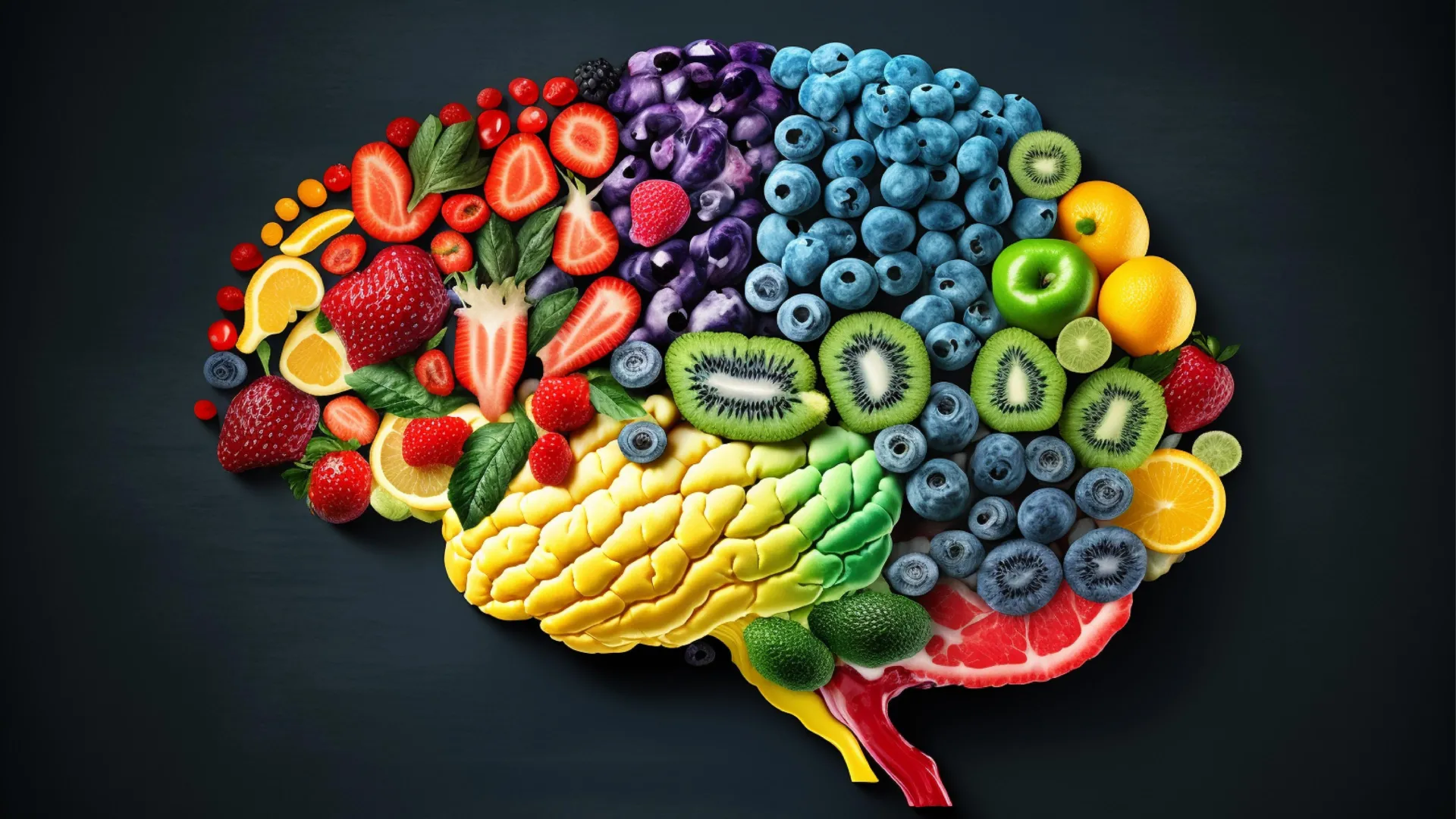
Following the MIND diet may help slow brain shrinkage and delay some signs of brain aging by years.
Date:
October 1, 2026osely showed slower brain shrinkage and less grey matter loss over time, with the strongest differences equivalent to about 2.5 years of delayed brain aging. Berries and poultry were linked with healthier brain changes, while sweets and fried fast foods were associated with greater tissue loss.
Share:
FULL STORY
A diet that combines elements of the Mediterranean diet with an eating plan designed to lower blood pressure may help slow some of the structural changes that occur as the brain ages, according to research published online in the Journal of Neurology Neurosurgery & Psychiatry.
Greater adherence to the MIND diet was linked to less brain tissue loss over time, particularly in grey matter, which plays an important role in memory, learning, decision making, and information processing. It was also associated with less enlargement of the brain’s ventricles, fluid filled spaces that tend to grow as brain tissue shrinks.
What Is the MIND Diet?
The Mediterranean-Dietary Approaches to Stop Hypertension Diet Intervention
The Mediterranean-Dietary Approaches to Stop Hypertension Diet Intervention for Neurodegenerative Delay diet, or MIND for short, has previously been associated with better cognitive health, according to the researchers.
The eating pattern emphasizes green leafy vegetables; other vegetables; berries; nuts; whole grains; fish; beans; olive oil; and poultry, along with moderate wine consumption. It also recommends limiting butter/margarine, cheese, red meat, pastries/sweets, and fried fast foods.
Although previous research has connected the MIND diet with cognitive benefits, its relationship with age related changes in brain structure has remained less clear. Those structural changes are also relevant to neurodegenerative diseases such as Alzheimer’s and Parkinson’s diseases.
Researchers Tracked Brain Changes for Years
To investigate, researchers studied 1647 middle aged
To investigate, researchers studied 1647 middle aged and older adults (average age 60 at the start of the study) from the Framingham Heart Study Offspring cohort (FOS).
Participants underwent regular health evaluations every 4-8 years. Starting in 1999, they also received MRI brain scans every 2-6 years.
Diet was assessed through at least 1 food frequency questionnaire (FFQ) completed during check ups between 1991-5, 1995-8, and/or 1998-2001. Each participant also had at least 2 brain MRI scan assessments between 1999 and 2019 and showed no evidence of stroke or dementia at the time of their first MRI scan.
The average MIND diet score was just under
The average MIND diet score was just under 7 out of a possible 15, with 15 representing the strongest adherence.
People in the highest third for MIND diet adherence were more likely to be women and college educated. They were also less likely to smoke or have obesity.
They were also less likely to have conditions that can affect brain health, including type 2 diabetes, high blood pressure, and cardiovascular disease.
Higher MIND Scores Linked to Slower Grey Matter Loss
Over an average follow up period of 12
Over an average follow up period of 12 years, MRI scans showed the expected age related changes across the group. These included decreases in total brain, grey matter, white matter, and hippocampal volumes.
At the same time, cerebrospinal fluid and ventricular volumes increased, as did white matter hyperintensities, which appear as bright spots on MRI scans and can indicate tissue damage.
However, people with higher MIND diet scores experienced slower loss of grey matter.
Each 3 point increase in MIND diet score was associated with slower grey matter loss of (0.279 cm³/year). According to the researchers, that corresponded to 20% less age related decline and the equivalent of 2.5 years of delayed brain aging.
A similar pattern appeared in ventricular enlargement
A similar pattern appeared in ventricular enlargement. Each 3-point rise in MIND diet score was associated with slower expansion of total ventricular volume by −0.071 cm³/year, equivalent to 8% less tissue loss and about 1 year of delayed brain aging.
Some foods appeared to contribute more strongly to the favorable associations.
Higher berry intake was linked to slower increases in ventricular volume. Poultry was also associated with slower ventricular enlargement, along with a slower decline in grey matter.
In contrast, higher consumption of sweets was associated with faster ventricular enlargement and greater hippocampal atrophy. Fried fast foods were also linked to a larger decline in hippocampal volume.
MIND-recommended foods rich in antioxidants, such as berries,
“MIND-recommended foods rich in antioxidants, such as berries, and high-quality proteinonal damage,” suggest the researchers. “Conversely, fried fast foods, often high in unhealthy fats, trans fats, and advanced glycation end-products, may contribute to inflammation and vascular damage,” they add
Not every food produced the expected pattern.
Higher whole grain intake was associated with several unfavorable structural changes, including faster losses of grey matter and hippocampal volume, as well as faster ventricular enlargement.
Cheese showed the opposite pattern. Greater cheese intake was associated with slower declines in grey matter and hippocampal volume, less ventricular enlargement, and fewer white matter hyperintensities.
Benefits Appeared Stronger in Older Adults
The overall associations remained consistent across several additional
The overall associations remained consistent across several additional analyses and were stronger among older participants.
The researchers say this may suggest that the MIND diet could be especially relevant for people at greater risk of faster brain aging or those who show more variation in the pace of brain atrophy.
Stronger associations were also seen among participants who were more physically active and among those who were not overweight or obese.
That pattern raises the possibility that combining
That pattern raises the possibility that combining a brain healthy diet with other healthy lifestyle habits could help reduce the risk of neurodegenerative disease, the researchers say.
The Study Cannot Prove Cause and Effect
The findings come from an observational study, so they cannot establish that the MIND diet directly caused the slower brain changes.
The researchers also note that food frequency questionnaires rely on participants accurately remembering what they ate, which can introduce recall bias.
They were also unable to rule out mild
They were also unable to rule out mild cognitive impairment at the time of the first MRI scan, changes in diet over time, or the influence of genetic risk factors.
Because the participants were predominantly White, the findings may not apply equally to people from other ethnic backgrounds.
Still, the researchers conclude: “These findings reinforce the potential of the MIND diet as a brain-healthy dietary pattern and support its role in strategies aimed at slowing neurodegeneration in aging populations.”
Materials provided by BMJ Group. Note: Content may be edited for style and length.
- Hui Chen, Gulisiya Hailili, Lu-sha Tong, Leqi Fei, Yaying Cao, Xin Xu, Xue Li, Debora Melo van Lent, Changzheng Yuan. Adherence to the MIND diet and longitudinal brain structural changes over a decade: evidence from the Framingham heart study offspring cohort. Journal of Neurology, Neurosurgery, 2026; 97 (6): 505 DOI: 10.1136/jnnp-2025-336957
BMJ Group. “This diet may slow brain aging by 2.5 years.” ScienceDaily. ScienceDaily, 1 October 2026. <www.sciencedaily.com/releases/2026/09/260930225503.htm>.
BMJ Group. (2026, October 1). This diet may slow brain aging by 2.5 years. ScienceDaily. Retrieved October 1, 2026 from www.sciencedaily.com/releases/2026/09/260930225503.htm
BMJ Group. “This diet may slow brain aging by 2.5 years.” ScienceDaily. www.sciencedaily.com/releases/2026/09/260930225503.htm (accessed October 1, 2026).
RELATED STORIES
