

Published November 4, 2026 05:56AM
Monica Bright is a yoga teacher whose continuing education centered on injury mechanics and movement. She breaks down the common yoga mistakes that could be worsening lower back discomfort, and offers options for relief. You can also learn more about yoga poses for your lower back.
Lower back discomfort is one of the most common pain points among people worldwide. If you fall into that category and also do yoga, chances are you’ve expected the practice to bring you relief. But certain movements in yoga, and how you approach them, can sometimes have the opposite effect of the lower back release that you were hoping to achieve.
Learning to recognize what triggers tightness in your lower back can help you make more supportive choices on and off the mat. That way, you’re still working toward undoing your discomfort, but without accidentally worsening it.
4 Mistakes in Yoga That Could Worsen Lower Back Discomfort
Whether you’re in class or at home, or even moving throughout your everyday life, notice whether any of the following approaches to movement worsens your lower back sensitivity—and explore the following alternatives that might help relieve your discomfort.
1. Moving Too Fast
Some people’s lower back strain is aggravated by moving too quickly. This is often the case with forward rounding. Think Seated Forward Bend or reaching down to pick something up off the floor. Moving slowly allows you to pay attention to the sensations in your body and ensures you’re not accidentally forcing yourself to move too far into a stretch and tweak your lower back.

What to try instead:Throughout your yoga practice, and even during your day, ask yourself, “How does it feel when I move more slowly?”
2. Not Paying Attention to Your Spine’s Natural Curve
The “neutral” position of your spine that you commonly hear yoga teachers mention includes several curves, including one in the lumbar spine that is concave, meaning it curves inward. But many students have a tendency to round the lower back during certain poses, such as forward bends and Chair Pose, which can have the effect of flattening the lower spine and causing tension.
What to try instead:Maintaining that neutral spine can be more beneficial than “flattening” it for some students with a track record of stiffness and soreness in the lower back. That comes into play in several common yoga poses.
In Chair Pose, for instance, there is a tendency to draw the core toward the spine so much that it counteracts the natural curve in the lower back. Maintaining a neutral spine means keeping the length in your lower back rather than tucking the tailbone.
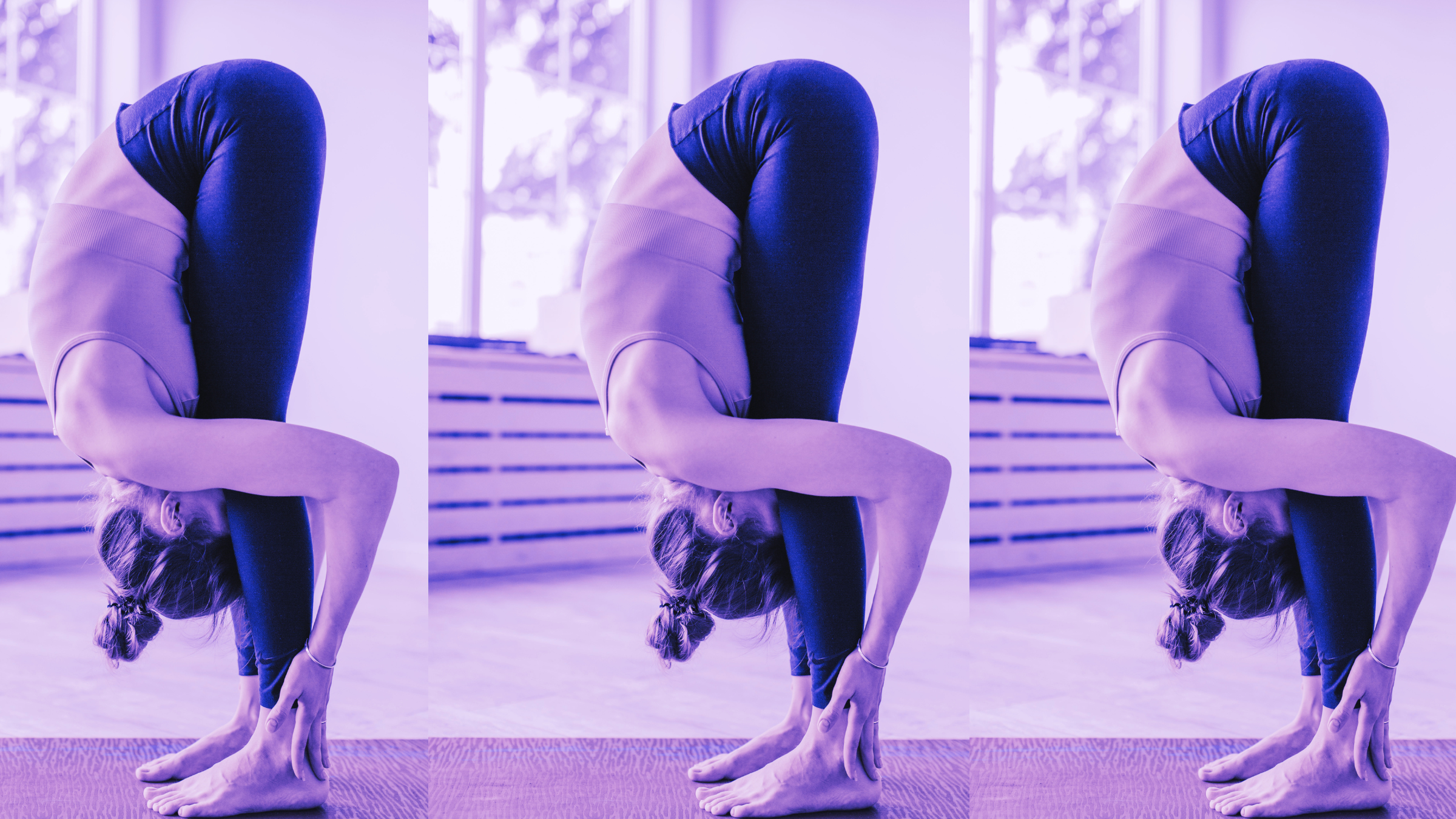
In Standing Forward Bend, keeping a neutral spine means being aware if you are rounding your lower back as you reach forward and, instead, hinging at your hips, perhaps bending your knees, and not being concerned with how far forward you fold.
However, some students find a greater sense of ease in the lower back by rounding forward. Ask yourself, “Does my lower back feel better, or worse, with rounded forward folds?”
3. Not Using Props or Taking Variations
If your lower back is sensitive, your yoga practice might look different from the person’s on the mat next to you—and that’s okay. The goal in yoga isn’t to push past discomfort, but to find the alignment in which your lower back feels good. And sometimes that means taking variations.
What to try instead: Explore variations of poses—some of which might include using props, such as blocks—to help support your movements. Take Happy Baby, for example. Drawing your knees toward your chest and holding the backs of your thighs might feel more supportive to some. When sitting in a forward bend, placing a blanket underneath the lowest part of your back to slightly elevate your hips and provide more room for your lower back might be your preferred version. Finding the movement options that feel tolerable for you can be enormously helpful while you’re learning to prioritize your lower back.
4. Ignoring The Nervous System’s Role
Stress, poor sleep, a sense of being overwhelmed, even anxiety surrounding practicing certain movements can put your body on high alert and cause your nervous system to brace for impact. This has the potential to turn up the volume on physical discomfort. Understanding how to downregulate your nervous system, on the other hand, can help your entire body relax.
What to try instead:You’re likely familiar with some of the practices that activate your parasympathetic nervous system, including resting in poses such as Child’s Pose, Legs Up the Wall, or Crocodile and practicing various pranayama (breathwork) techniques, including Box Breathing or simply lengthening your exhalations. Even slowing the pace of your practice and taking the variations that feel good to you are ways of signaling to your nervous system that you’re safe. Experiment with one or two calming exercises prior to your next yoga class or at-home practice.
Practicing with these ideas in mind will ultimately help you recognize how to support your body when practicing yoga. This doesn’t mean you need to have to have all of the answers. It simply, but it does means that you are present, aware, and listening to your own body’s signals.
