

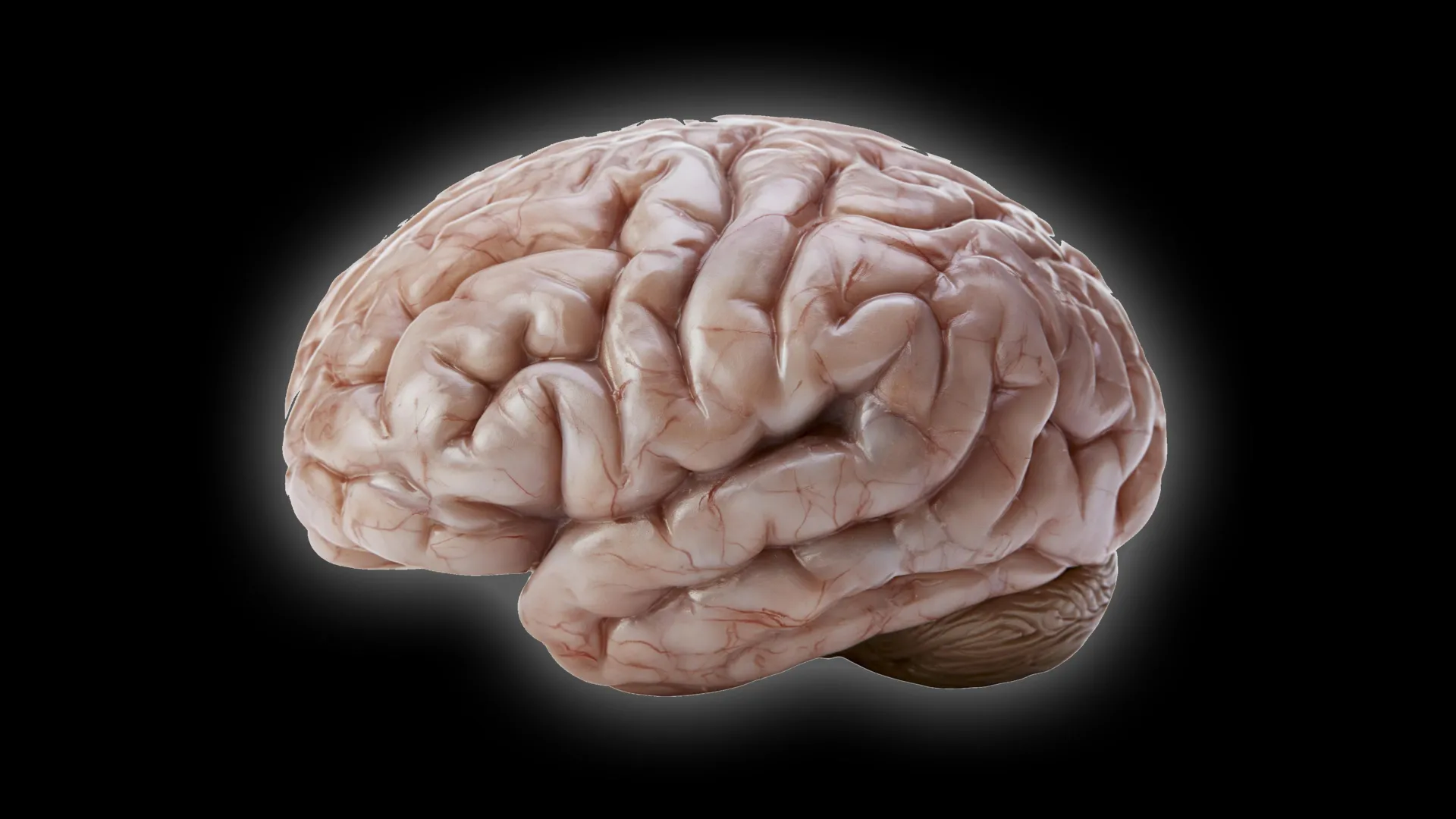
Most primates have relatively large brains covered in distinctive folds and grooves. However, common marmosets (Callithrix jacchus) are an unusual exception. These small monkeys have brains that are almost entirely smooth, with very little folding. Scientists at the German Primate Center (DPZ), the Leibniz Institute for Primate Research in Göttingen, have now identified several cellular processes that help explain this difference.
Using miniature brain structures known as organoids, the researchers discovered that certain neural progenitor cells, which produce neurons, develop differently in marmosets than in humans. These differences involve the cells’ structure, the speed at which they divide, and the timing of their development. Together, these changes reduce the number of neurons produced, contributing to the smaller size and smoother surface of the marmoset brain. Published in Science Advances, the findings provide new insights into primate brain evolution and could eventually improve our understanding of human brain development disorders.
Why Some Primate Brains Are Smooth Instead of Folded
Brain size and the extent of surface folding are important features that distinguish different primate species. The human brain, for example, has a highly folded surface resembling the ridges and grooves of a walnut. This arrangement greatly expands the brain’s surface area, creating room for billions of neurons that support complex thinking and other advanced mental abilities.
Scientists believe that the common ancestor of modern
Scientists believe that the common ancestor of modern primates already possessed a moderately sized brain with at least some folding. Yet not all primates living today retain these characteristics.
Common marmosets (Callithrix jacchus), small monkeys native to South America that are becoming increasingly important in biomedical research, have brains with almost no visible folds. Researchers at the German Primate Center set out to determine why their brains develop so differently from those of humans and other primates.
“We wanted to understand which changes at the cellular level cause the marmoset brain to grow less and form fewer folds,” explains Lidiia Tynianskaia, one of the study’s two first authors and a PhD student in the Junior Research Group Brain Development and Evolution at the DPZ. “At the beginning of development, the common marmoset brain exhibits the typical structure and composition of a large, folded primate brain. As development progresses, processes must therefore occur that effectively slow down the production of nerve cells.”
Scientists Discover What Slows Brain Growth
To investigate these developmental differences, the team compared
To investigate these developmental differences, the team compared brain organoids grown from human and common marmoset cells. Their attention centered on neural progenitor cells, the cells responsible for generating neurons during brain development.
These progenitor cells play a major role in determining the eventual size and shape of the brain. The more neurons they produce, the greater the potential for the cerebral cortex to expand and develop folds.
The researchers found that the marmoset’s smaller, smoother cerebral cortex is not the result of a single developmental change. Instead, several differences involving distinct types of progenitor cells work together to limit neuron production and brain folding.
Our investigations have shown that certain progenitor cells
“Our investigations have shown that certain progenitor cells in the common marmoset divide significantly more slowly than in humans,” explains César Mateo Bastidas Betancourt, also a first author of the study and a PhD student in the Junior Research Group. “Other progenitor cells have a simpler structure than their human counterparts, with fewer processes, and are therefore less proliferative. Both of these factors ultimately result in fewer nerve cells, which contributes to a smaller size and less folding of the cerebral cortex in marmosets.”
The scientists also identified important differences in when certain progenitor cell characteristics and behaviors emerge during development. Compared with humans, marmosets have a shorter overall period during which these cells can multiply rapidly.
Together, the slower rate of cell division, simpler cell structures, and shorter window for rapid growth help explain why the marmoset brain produces fewer neurons and develops far fewer folds.
Miniature Brains Reveal Important Developmental Clues
Much of the research relied on brain organoids,
Much of the research relied on brain organoids, small, three-dimensional structures grown from cells that reproduce important features of early brain development. These miniature models allowed scientists to investigate developmental changes across multiple samples and compare the timing of key processes.
“The study combines the advantages of in vivo and in vitro methods,” says Michael Heide, head of the Junior Research Group Brain Development and Evolution. “Organoids are well-suited for obtaining statistically robust results because such sample sizes are not feasible in primates. We subsequently repeated some key experiments in fetal brain tissue to confirm the results from the organoids.”
One particularly important finding involved the relationship between development in organoids and development in actual marmoset brains. The researchers determined that a marmoset brain organoid grown for 50 days closely matches the developmental stage of a natural marmoset brain at day 90.
Establishing this relationship was essential because brain organoids
Establishing this relationship was essential because brain organoids and actual brains do not necessarily develop at the same rate. By identifying corresponding developmental stages, the scientists could make meaningful comparisons and interpret their experimental findings more reliably.
What Smooth Monkey Brains Reveal About Human Brain Evolution
The findings help explain how relatively small differences in the behavior and developmental timing of brain-building cells can contribute to major differences in brain size and folding among primates.
They also offer a potential explanation for how the wide variety of primate brain shapes and sizes emerged over evolutionary time, including why some species developed relatively smooth brains while others possess much larger, heavily folded ones.
Beyond their evolutionary significance, these discoveries provide a foundation for investigating how the human brain develops and what happens when those processes are disrupted. A better understanding of the cellular mechanisms that control neuron production and brain growth could ultimately help researchers study developmental disorders affecting the human brain.
